Total Solar Eclipse in Valencia 2026: Exact Time, Where to Watch It and How to Prepare
In short: On August 12, 2026 at 8:33 PM, Valencia has a TOTAL solar eclipse lasting one minute (not partial): the city is inside the path of totality. La Malvarrosa beach is the official viewing spot. Certified ISO 12312-2 glasses on at all times, except for that exact minute of totality.
This eclipse has already happened. The next ones visible from València are the partial eclipse of 2 August 2027 and the annular eclipse of 26 January 2028 — all three, with times and advice, in the guide to solar eclipses in València.
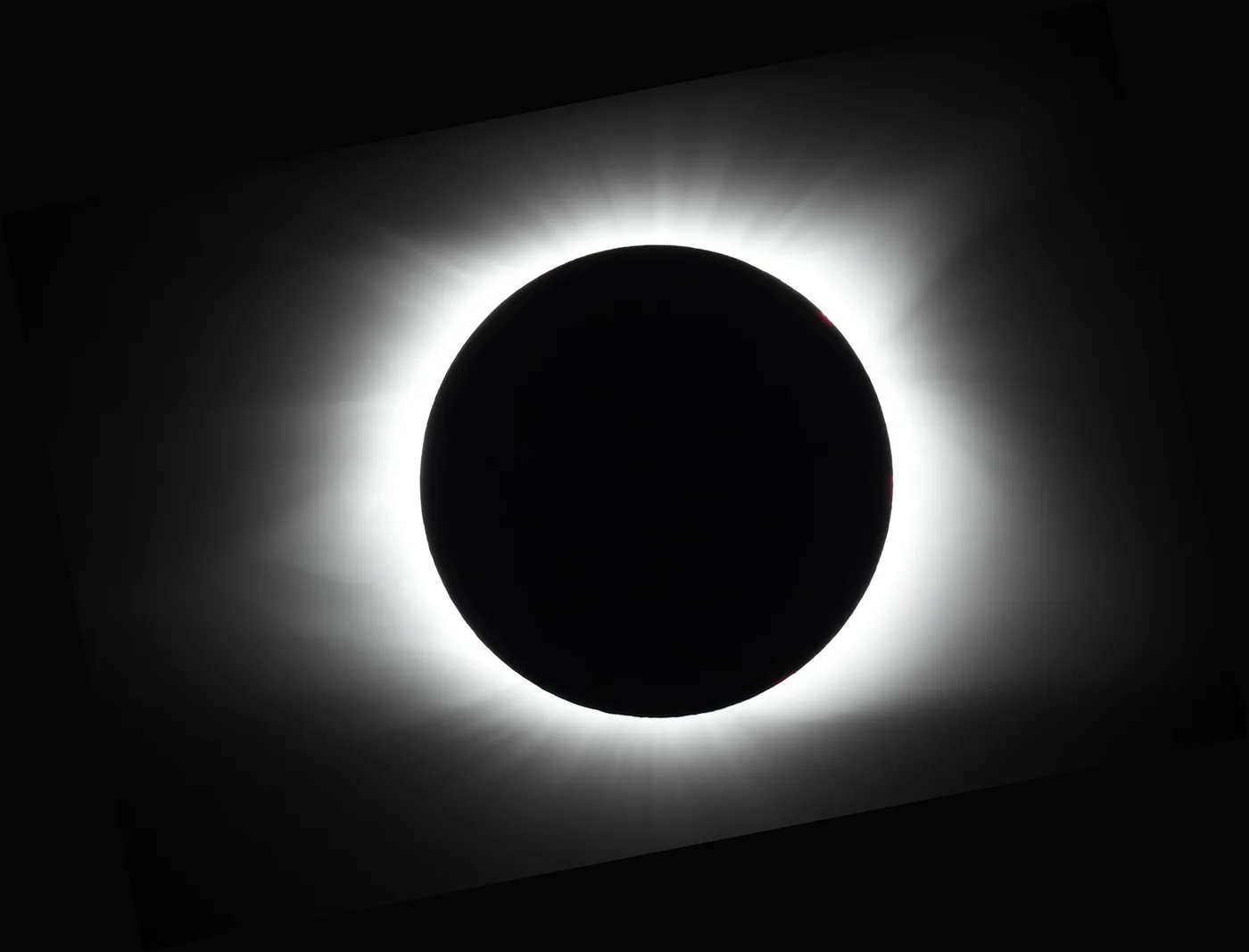
On August 12, 2026, at 8:33 PM, the sky over València will go dark for one minute. It will be a total solar eclipse: the Moon will completely cover the Sun's disk, and during those seconds, you'll be able to see the solar corona with the naked eye, that white halo normally hidden by the Sun's glare. This isn't a partial eclipse like the ones visible every few years. It's total, and València lies within the path of totality: you don't need to travel anywhere to experience it, though your exact viewing position does matter, a lot.
According to outlets like Euronews and the Instituto de Astrofísica de Canarias, this is the first total eclipse to cross mainland Spain since 1912 (or since 1905, if you only count eclipses that were total from start to finish). The 1959 eclipse was also total, but only in the Canary Islands. This time it's mainland Spain's turn, and València's in particular.
Check the event listing in the agenda to add it straight to your calendar.
When It Happens and Exactly What València Will See
These are the official times for the city of València (Central European Summer Time, UTC+2), according to Wikipedia's circumstances table and NASA, both based on the same astronomical calculations:
- 7:38 PM: the partial phase begins, the Moon starts to "bite into" the Sun.
- 8:32:30 PM: totality begins. This is when, and only when, you can take off your glasses.
- 8:33:00 PM: maximum eclipse.
- 8:33:30 PM: totality ends. Glasses back on immediately.
- ~9:01 PM: the partial phase ends, practically at the same time as sunset.
In total, totality lasts between 59 and 62 seconds in the city of València, according to the sources consulted. That's short compared with other parts of Spain: around 94 seconds in Castelló de la Plana, and more than a minute and a half in Burgos or León. The reason is València's position within the path: NASA places the southern limit of the total eclipse between Cullera (inside, but with barely 15 seconds) and Gandia (already outside, with a 99.9% partial eclipse, not total). València, further north, does fall within the path with a reasonable margin, but its magnitude (1.0036, just above the 1.0 threshold) confirms it's close to the edge, not at the center of the path.
This has an important practical consequence: the Sun will be very low, only about 4° above the west-northwest horizon, barely half an hour before sunset. Any building, hill, or low cloud to the west can block your view of totality even if the clock says you're within the path. You need a clear horizon toward the sea or the west, not a gap between apartment blocks.
Where to Watch It in València
The València City Council has designated Malvarrosa beach and El Cabanyal (a stretch of about 850 meters) as the official viewing spot, with capacity planned for around 10,000 people and an open horizon toward the sea, exactly the direction where the eclipsed Sun will be. It's probably the simplest option if you live in the city: a beach, no obstructions, and coordinated by the city council itself.
The Generalitat Valenciana, for its part, has set up eight official viewing points across the region via its website eclipses.gva.es: besides the city of València, there's Puçol, Utiel, Aras de los Olmos, Macastre, Castelló, Benassal, and Peníscola, each with its own capacity and infrastructure.
If you want extra margin (about 30 more seconds of totality and the Sun a bit higher), Castelló de la Plana is about 72 km from València, 43 to 55 minutes away via the AP-7 depending on traffic. You don't need to go, but it's the most comfortable option if you'd rather not rely on the path's exact edge.
What you shouldn't do is head south thinking it won't make a difference. Cullera, about 40 km away, barely grazes totality with 15 seconds; Gandia, about 65 km away, is already outside the path and will only see a partial eclipse, no matter that 99.9% of the Sun will be covered. If your plan is the beach, stay in València or head north, never south.
How to Prepare: Glasses and Safety
Never look at the Sun without certified protection, not even during the most advanced partial phase. Eclipse glasses must meet the ISO 12312-2 standard. A little-known trick for spotting fakes: the American Astronomical Society explains that no legitimate product should have "ISO certified" or the ISO logo printed on the packaging, because that itself goes against the standard. Real verification only comes from accredited laboratories, not a stamp on the box.
To check a pair of glasses at home: looking through them, a lit light bulb should appear as a faint filament with everything else black; looking (without the Sun) toward a car in sunlight, you should barely see a weak glint, never people or buildings in sharp detail. Discard any pair that's scratched, cracked, or coming apart from its cardboard frame.
The Spanish Government and the ONCE are giving away 2 million certified free glasses before August 12, a safer alternative to buying a pair from just any online seller.
If you don't have glasses, there are safe alternatives: a pinhole projector made with aluminum foil and cardboard (never look through the hole, project the image onto another surface), a kitchen colander, or shade 13 or 14 welder's glass (auto-darkening welding helmets won't work, as they don't react fast enough).
The Rule You Need to Get Right: When to Take Your Glasses Off
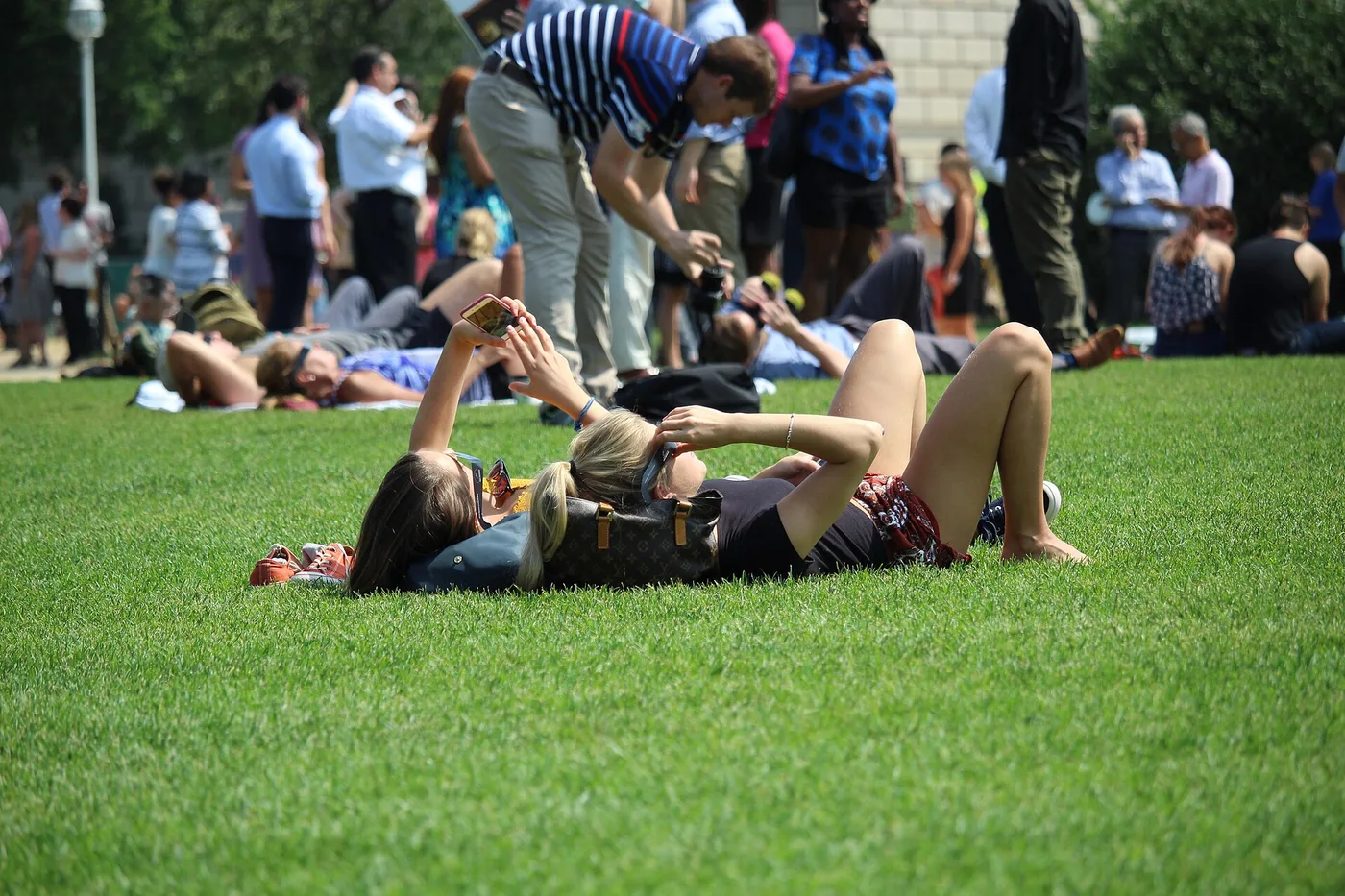
Throughout the entire partial phase, before and after totality, your glasses stay on at all times, no exceptions. You can only take them off at the exact instant the Sun disappears completely and it suddenly turns to night: that's totality. As soon as even the faintest sliver of the solar disk reappears, the glasses go straight back on. This is the moment when most people damage their eyesight during any eclipse, by taking them off too early or not putting them back on in time.
Since València is near the southern edge of the path, it's better to go by what you see (has the Sun disappeared completely or not?) than by the clock. If you're not sure totality has arrived, keep your glasses on.
How to Photograph It
If you're using a camera or phone during the partial phase, you need a certified solar filter in front of the lens; without one, the sensor and your eyes run the same risk. The filter can only come off during totality, because the corona is a million times fainter than the normal Sun and wouldn't be visible through a filter designed to block direct light, and it has to go back on before totality ends. Since this all happens in under a minute and in near-darkness, it's worth practicing removing and replacing the filter at home beforehand.
With a phone, during the partial phases hold a certified filter over the lens if you want to photograph the Sun; during totality, remove it and use night mode or HDR if your phone has it. That said, don't expect a sharp photo of the corona with a phone, that takes a telephoto lens and tracking. What does come out well on a phone is the atmosphere: the sky darkening, the orange glow along the whole horizon, people looking up.
Will the Weather Cooperate?
August is statistically the driest and sunniest month of the year in València: AEMET records an average of 10.2 completely clear days and 288 hours of sunshine in August (more than 9 hours a day), with only 2-3 days of rain. AEMET has also published a specific study on expected cloud cover for the eclipse, using satellite data from 2010 to 2025 for the eclipse's time slot: the Cantabrian coast has the worst historical forecast (30-50% chance of clear sky), while the interior of the mainland fares better (50-70%). The study doesn't give a specific figure for the Valencian Community, but the general August pattern on the Mediterranean coast works in its favor.
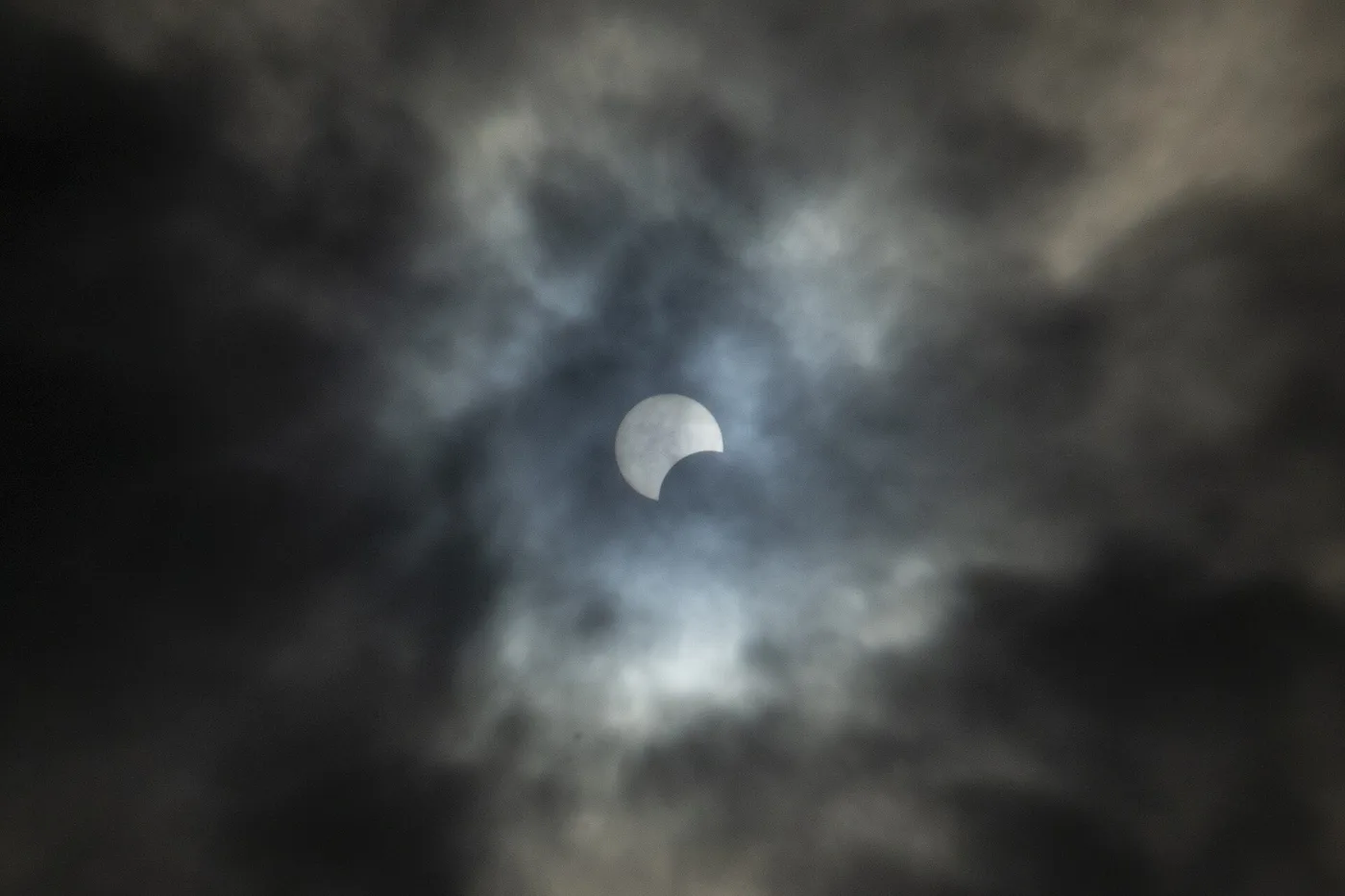
The real risk in València isn't morning fog, but the chance of some low cloud forming to the west in the late afternoon, right where you need to look. Reliable forecasts won't be available until about a week before the eclipse, so it's worth checking the weather in the days leading up and having a backup plan (beach or rooftop, facing the sea) in case your nearest horizon gets complicated.
Traffic Closures and How to Get Around
La Devesa and the Parc Natural de l'Albufera will be closed all day on August 12, and the CV-500 road will be cut off starting at 6:00 PM. The EMT is reinforcing lines 18, 19, 24, 25, 31, 32, 92, 93, 95, 98 and 99, and the metro (lines L4, L6 and L8) is recommended to reach the beach area. With around 10,000 people expected at Malvarrosa alone, it's best to leave with time to spare and go on foot or by public transport: parking nearby that evening is going to be difficult.
Where to Watch It Live If You Can't Go Out
The Observatori Astronòmic of the Universitat de València will livestream the eclipse on YouTube from 7:30 to 9:00 PM, with two cameras: one close-up through a telescope and another giving a panoramic view of the city, from the historic dome of the Rectorado. The Ciutat de les Arts i les Ciències also has eclipse-related programming at the Museu de les Ciències, including a new screening at the Hemisfèric.
Frequently Asked Questions
Is the eclipse total or partial in València?
Total. València is within the path of totality, though near its southern edge, with totality lasting approximately one minute (59-62 seconds) around 8:33 PM on August 12, 2026.
At exactly what moment can I take my glasses off?
Only during totality, when the solar disk disappears completely, roughly between 8:32:30 and 8:33:30 PM. Before and after that, certified glasses stay on at all times. Go by what you see, not by the clock.
Do I need to travel outside the city to see it well?
No, it's not necessary: the city of València lies within the path of totality. It is worth finding a clear horizon toward the west or the sea, such as Malvarrosa beach, the official spot designated by the city council.
What happens if it's cloudy that day?
August is the driest month of the year in València, but there are no guarantees. If the western horizon clouds over, having a backup plan in another part of the city with a better view, or following the Universitat de València's live broadcast, are the most sensible alternatives.
Is it safe for children?
Yes, always with certified eclipse glasses (ISO 12312-2 standard) on throughout the entire partial phase, and making sure they only take them off during totality and put them back on as soon as the Sun reappears.
Comments
Sign in with Google to comment and rate
What did you think? Be the first to share it.