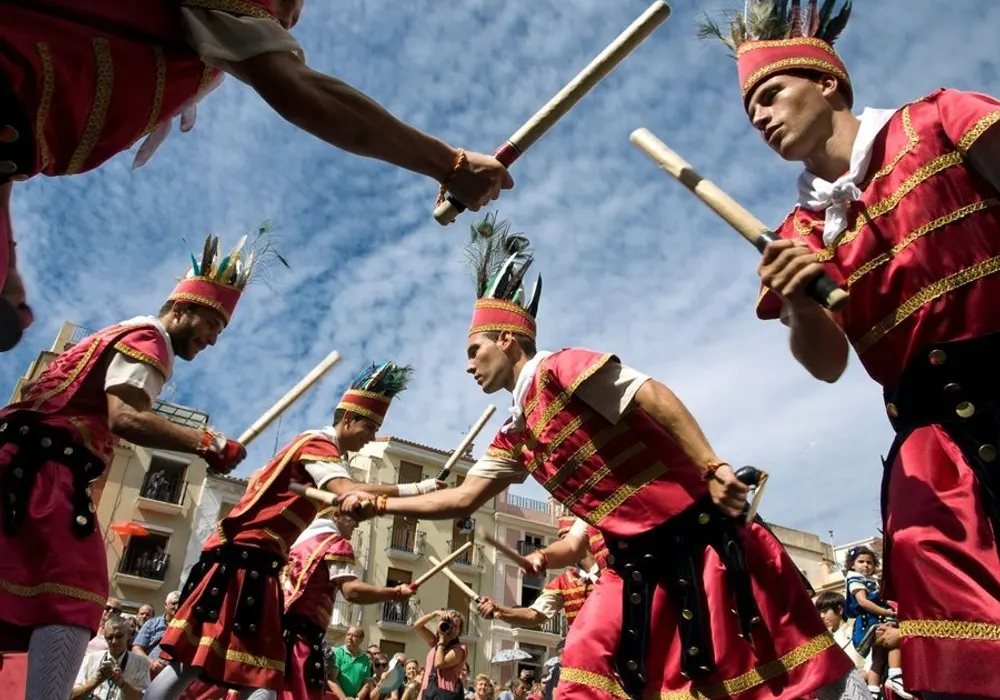
Festes de la Mare de Déu de la Salut of Algemesí

The Festes de la Mare de Déu de la Salut in Algemesí are the town's great patronal celebration and, since 2011, part of UNESCO's Intangible Cultural Heritage of Humanity. The main days are 7 and 8 September, when the whole town pours into three processions: the Processó de les Promeses (night of the 7th to 8th), the short but intense Processoneta del Matí (morning of the 8th), and the long Processó General de Tornada (evening and night of the 8th), which winds through the historic centre around the Basílica de Sant Jaume and the Plaça Major. More than a thousand participants bring to life the traditional dances that make the festival unique: La Muixeranga with its famous human towers, Els Bastonets, La Carxofa, Els Arquets, Les Pastoretes, the Bolero de les Llauradores and Els Tornejants. The music, the pealing bells, the "balladetes" and the entrance of the Virgin's image into the basilica create one of the most baroque and moving spectacles of the Valencian festive calendar. Watching the processions in the streets is free; the full official programme is published by the Patronat de la Festa at festapatrimonialgemesi.com.
Algemesí is a working town in the Ribera Alta, half an hour or so south of València, and for two days in September it stops being an ordinary town. UNESCO added this festival to its Intangible Cultural Heritage list in 2011. What holds it up is not a show staged for visitors but more than a thousand residents who dance, play and carry.
Three processions, and what a muixeranga is
The main days are 7 and 8 September, built around three processions. The Processó de les Promeses runs through the night of the 7th into the 8th. The Processoneta del Matí, on the morning of the 8th, is short and intense. The Processó General de Tornada, on the evening and night of the 8th, is the long one, winding through the old centre between the Basílica de Sant Jaume and the Plaça Major. Inside them are the dances the town is known for: La Muixeranga, which builds human towers, plus Els Bastonets, La Carxofa, Els Arquets, Les Pastoretes, the Bolero de les Llauradores and Els Tornejants. Add pealing bells and the moment the Virgin's image is carried back into the basilica.
Getting there and where to stand
Algemesí has a Renfe Cercanías station on the València to Xàtiva line, so you can do this without a car or a late bus back. Watching from the street is free. There is no seating: you stand, and the old-town streets are narrow and get packed, especially the Plaça Major and the basilica entrance. Pick a wide stretch of the route and hold it rather than chasing the procession. The full official programme is published by the festival's Patronat.
Making a day or a weekend of it
The same railway line continues south, so this pairs naturally with another stop. Xàtiva, with its hilltop castle, is on it. The Valencian festive calendar is dense and hard to read from outside, so the festival calendar is worth a look before you plan; for trains and buses to the towns, see this guide, and for other destinations within an hour, the prettiest villages near València.

Comments
Sign in with Google to comment and rate
What did you think? Be the first to share it.