Casa Museo de la Seda (Casa del Arte Mayor de la Seda)
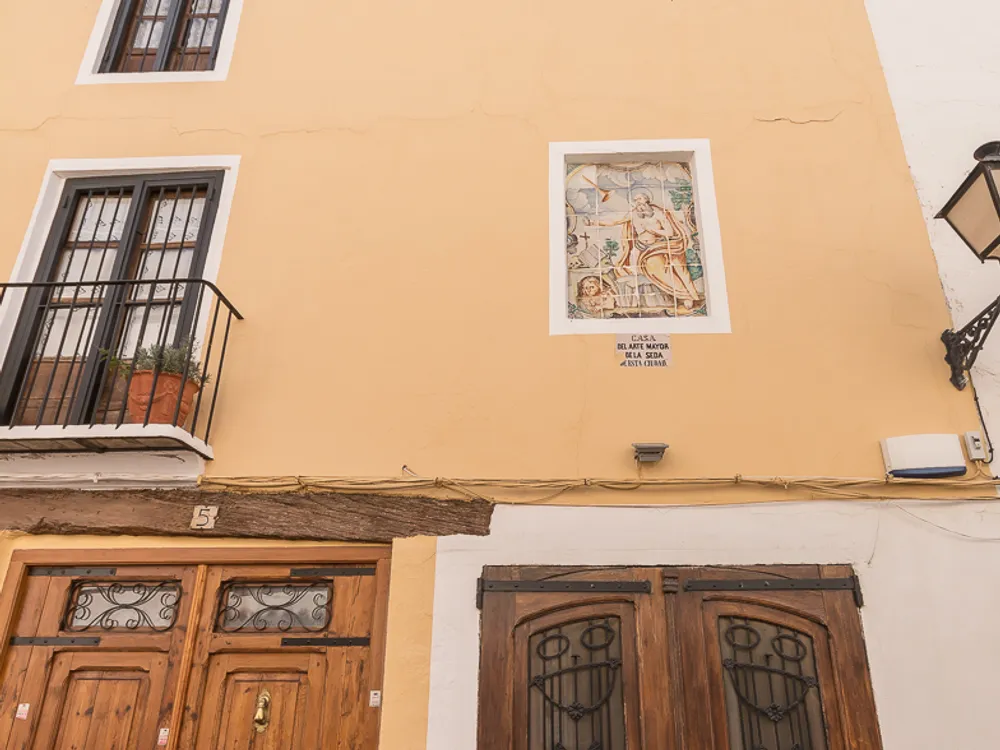
A house bought in 1740 by the Silk Weavers' Guild as its headquarters, in a dead-end Moorish alley within the Barrio de la Villa, a reminder of Requena's silk-making past. The museum preserves spinning wheels, shuttles, combs and winders, plus a loom from the town's last silk factory; the façade bears a tiled altarpiece of Saint Jerome, patron of merchants and silk workers.
In 1740 the Silk Weavers' Guild bought this house, in a dead-end Moorish alley inside the Barrio de la Villa, to use as its headquarters. Today the Casa Museo de la Seda is the best way to grasp what Requena was when it lived off the looms.
What survives
The museum keeps spinning wheels, shuttles, combs and winders, and as its centrepiece a loom brought from the town's last silk factory. This is not a collection of cold display cases: these are the tools used to work the thread, and they help you picture the din of a workshop at full tilt.
A detail on the façade
Before you step in, look at the tiled altarpiece on the front: it shows Saint Jerome, patron of merchants and silk workers, the trade's signature right on the door. You are deep in the old town of Requena, so it pairs well with a walk to the nearby Cuevas de la Villa.
Frequently asked questions
What can you see at Requena's Silk House Museum?
Spinning wheels, shuttles, combs and reels, and as its centrepiece a loom from the last local silk factory. The façade features a tile altarpiece of Saint Jerome, patron of merchants and silk makers.
Where is the Silk House Museum?
In a Muslim-origin dead-end alley within Requena's Barrio de la Villa. The house was bought in 1740 by the Silk Weavers' Guild as its headquarters.
Is entry to the Silk House Museum free?
No, entry is not free. It's best to check prices and opening hours at the tourist office or the official site.
Comments
Sign in with Google to comment and rate
What did you think? Be the first to share it.