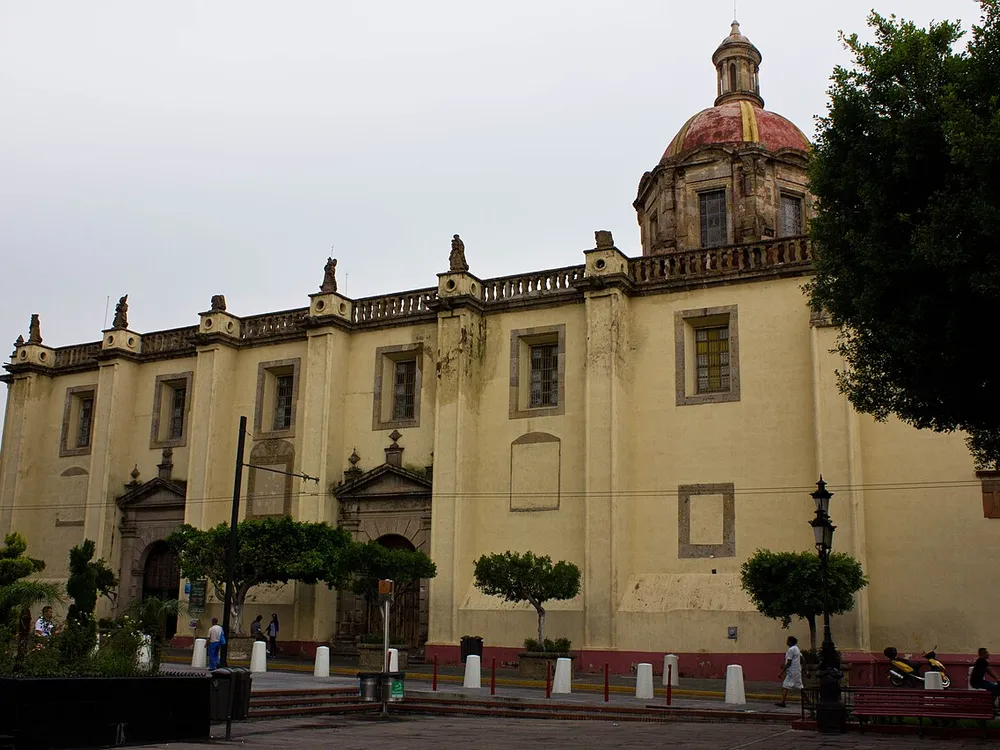
Templo de Santa María
Declared a National Monument in 1931, Santa María is famed for its splendid early-16th-century flamboyant Isabelline Gothic doorway, whose three archivolts brim with musician angels, virgins and cherubs, with the Annunciation in the tympanum. One of the three medieval parishes of the Barrio de la Villa, documented since 1333, it is a jewel of Requena's old town.
In the heart of the Barrio de La Villa, the historic quarter of Requena, the Templo de Santa María is one of the great jewels of the region's medieval heritage. Declared a National Monument in 1931, the church is celebrated for a doorway regarded as one of the masterpieces of flamboyant Gothic in the Valencia region.
History
Santa María was one of the three medieval parishes of the Barrio de la Villa and is documented from 1333, placing it among the oldest surviving traces of Christian Requena. Built into the tangle of narrow streets of the old town, it forms part of an urban ensemble that still preserves the character and original layout of the medieval town.
What to see
The church's great highlight is its splendid doorway, carved in the early 16th century in the Isabelline flamboyant Gothic style. Three archivolts are packed with musician angels, virgins and cherubs, while the scene of the Annunciation crowns the tympanum. It is worth pausing to take in the sculptural detail, which is unusually rich.
Tips for your visit
- Walk in through the streets of the Barrio de la Villa; the stroll is part of the experience.
- Study the doorway slowly and, if you can, in good light to appreciate the reliefs.
- Combine your visit with other corners of the historic centre of Requena and its surroundings.
Frequently asked questions
What stands out at Requena's Templo de Santa María?
Its splendid early-16th-century Isabelline florid Gothic doorway, with three archivolts full of musician angels, virgins and cherubs, and the Annunciation in the tympanum. It was declared a National Monument in 1931.
Where is the Templo de Santa María?
Right in the heart of the Barrio de La Villa, Requena's old town, among its narrow medieval streets.
Is it free to visit the Templo de Santa María?
Yes, entry is free. It is one of the three medieval parishes of the Barrio de la Villa, documented since 1333.
Comments
Sign in with Google to comment and rate
Be the first to comment.