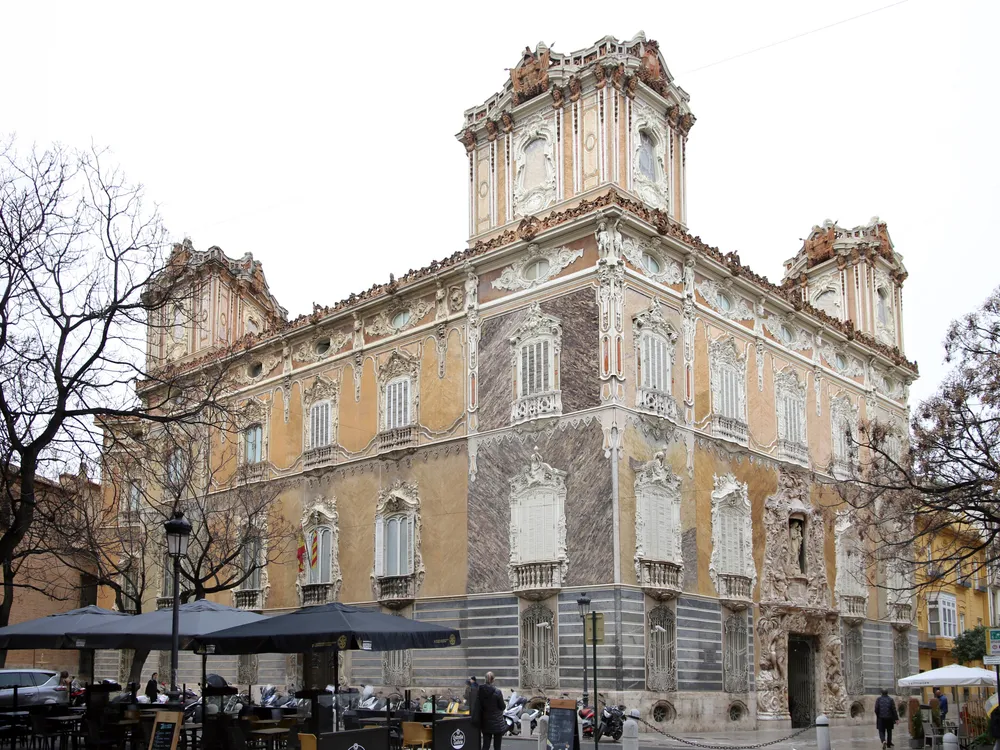
Museu Nacional de Ceràmica González Martí
✨ Free Saturday afternoons and Sundays
A world-class ceramics collection inside the Palace of the Marqués de Dos Aguas, whose rococo alabaster doorway is one of Valencia's most photographed sights. Tableware, tilework and even a 19th-century Valencian kitchen sit behind that façade.
The González Martí National Ceramics Museum holds a world-famous ceramics collection inside the Palace of the Marqués de Dos Aguas, whose alabaster doorway is one of the most photographed sights in the city. It's a double museum: the richness of the pieces is matched by the luxury of the palace rooms that house them.
History and building
The palace grew out of a Gothic building that the 3rd Marquis of Dos Aguas transformed into an opulent mansion around 1740. The famous alabaster doorway, designed by Hipólito Rovira and carved by Ignacio Vergara, is an allegory of the marquessate's title: on each side of the door, two atlantes pour out a pitcher of water, the "two waters" (dos aguas). The palace was declared a monument in 1941, and in 1949 the State acquired it to house the collection donated by Manuel González Martí and Amelia Cuñat. The museum opened in 1954.
What to see
- The largest national ceramics collection, from medieval pieces to designs by Picasso.
- The 19th-century Valencian kitchen, fully clad in tiles.
- The state carriages, including the "Carriage of the Nymphs", and the palace rooms with their original décor.
Practical tips
- It's right in the Ciutat Vella, next to the Silk Exchange and the Plaza Redonda.
- Open Tuesday to Sunday. Throughout summer 2026 entry is free for everyone because of façade restoration work; temporary access is via Calle Poeta Querol no. 2, and the rest of the year there are the usual free-entry slots.
- Pair it with the Silk Museum to grasp the splendour of Valencian craftsmanship.
Insider tip
Don't stop at the doorway: many tourists photograph it from outside and walk on without knowing what it hides within. The Valencian kitchen and the carriage hall are the real surprises, and the alabaster doorway conceals the visual pun of the "two waters" that gives the palace its name. Afterwards, keep discovering the city with our guide to what to do in València or lose yourself among more places in the old town.
Frequently asked questions
Is the Museu Nacional de Ceràmica free?
Yes, admission is free.
What can you see at the Museu Nacional de Ceràmica González Martí?
A world-famous ceramics collection inside the Palace of the Marqués de Dos Aguas, with tableware, tiles and lavishly opulent palatial rooms.
What is special about the museum's façade?
Its alabaster doorway, designed by Hipólito Rovira and carved by Ignacio Vergara, is one of València's most photographed sights.
Comments
Sign in with Google to comment and rate
What did you think? Be the first to share it.