Museu de les Ciències Príncipe Felipe
A hands-on science museum where touching is mandatory: three floors built for experimenting with electricity, DNA and outer space. Under Calatrava's white skeletal architecture, it works well for kids and curious adults alike.
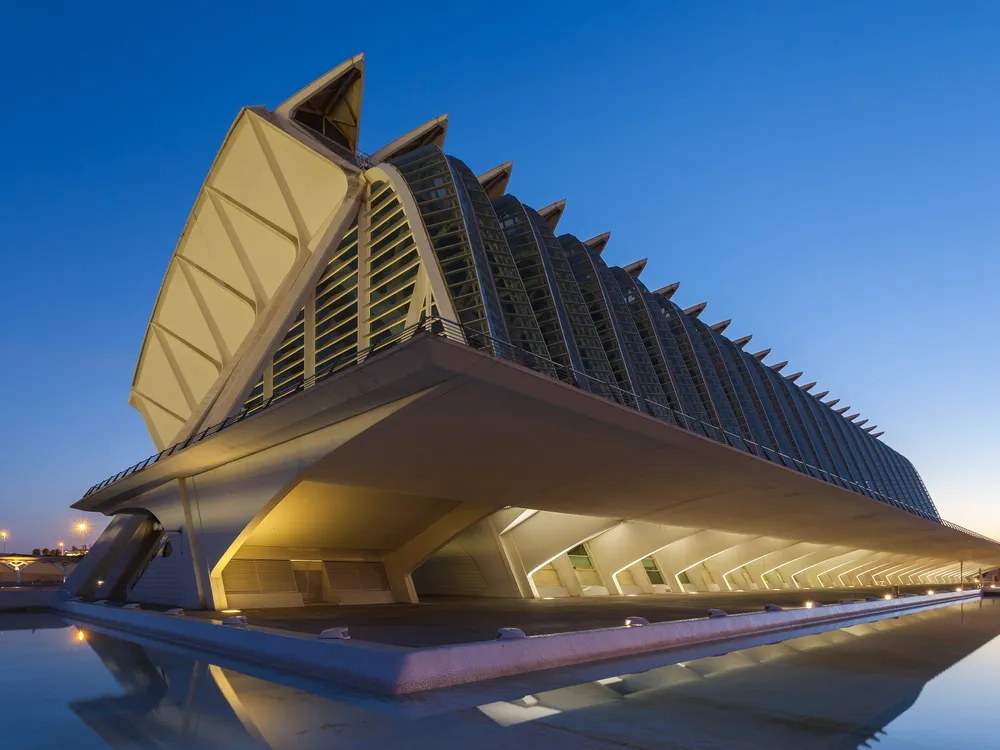
Beneath the white skeleton that Santiago Calatrava designed to mimic a whale's ribs, the Príncipe Felipe Science Museum is one of the most-visited buildings in the City of Arts and Sciences. Its motto says it all: here it is "forbidden not to touch, not to feel, not to think." That's three floors and over 40,000 square metres of hands-on science, designed so that adults and children alike leave with heads full of questions and answers.
History and what makes it special
The project was born in the 1990s as the centrepiece of the transformation of the old Turia riverbed into a great cultural complex, and the museum opened on 13 November 2000. Against the classic "look but don't touch" museum, the philosophy here is the opposite: the best way to understand electricity, DNA or gravity is to play with them.
What to see
- The Foucault Pendulum, one of the longest in the world at about 34 metres, which demonstrates the Earth's rotation live.
- The giant DNA sculpture and the Chromosome Forest, a walk through human genetics.
- The zero-gravity area and the space academy, with material from the European Space Agency.
- The static-electricity zones (get ready for your hair to stand on end!) and the live science workshops and demonstrations.
Practical tips
It works well with children, and if you're travelling as a family it's worth building time for: our guide on what to do in València with kids explains everything. Allow at least two or three hours. Admission is paid, with discounts and combined tickets with the Oceanogràfic and L'Hemisfèric that are good value if you plan to see more than one venue. It's easy to reach by bus or on foot from the centre along the Turia Gardens, where you can stop at Gulliver Park on the way.
INSIDER TIP: make the most of the live-demonstration timetable (the Faraday cage, the electricity table, the genetics dissection): these are what visitors remember most, and they aren't always clear on the map. Ask as soon as you arrive when each one runs and build your visit around them. If you go in summer, save the museum for the hottest hours: the interior is air-conditioned while the city bakes outside. To get the most out of the area, also check the guide on how to get around València.
Frequently asked questions
Is the Museu de les Ciències free?
No, there is an admission fee. Check the current price on the official Ciutat de les Arts i les Ciències website.
What can you do at the Museu de les Ciències?
It is an interactive museum where 'it is forbidden not to touch': three floors and over 40,000 m² to experiment with electricity, DNA or space, ideal for the curious of all ages.
Where is the Museu de les Ciències?
It is in the Ciutat de les Arts i les Ciències, under the striking white skeleton designed by Santiago Calatrava. It opened in November 2000.
Comments
Sign in with Google to comment and rate
What did you think? Be the first to share it.