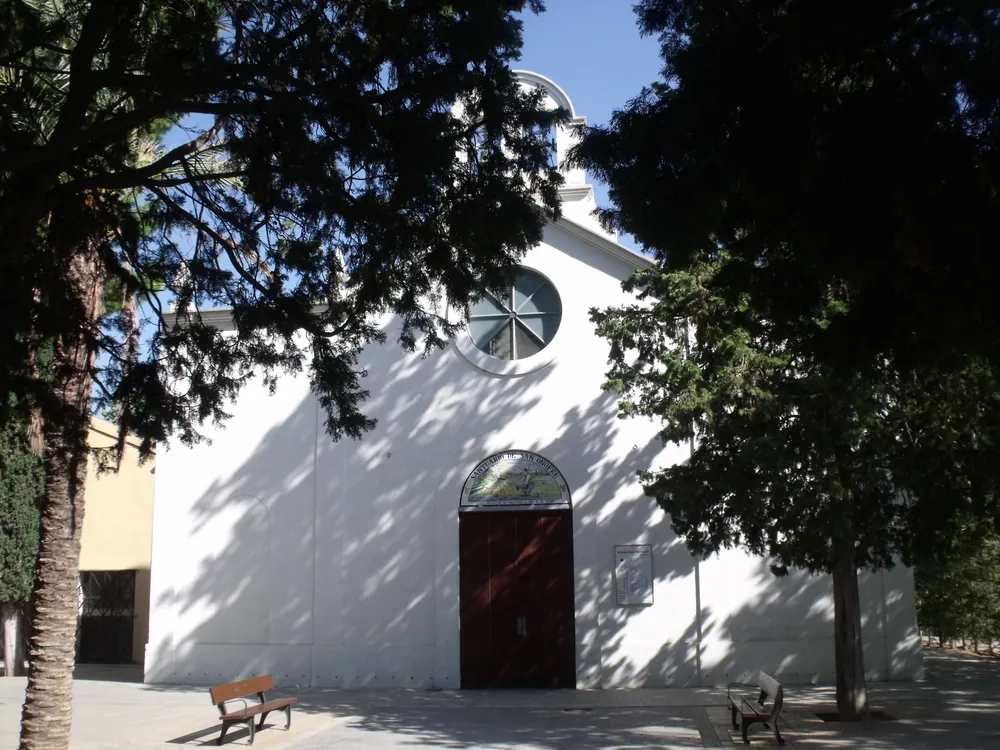
Ermita de Sant Onofre
Built around 1310-1320 beside an old mill, this hermitage is tied to the legend of Saint Onuphrius appearing to a miller, who according to tradition chose the spot himself. Saint Onuphrius was named patron of Quart de Poblet in 1896, and the chapel keeps a Baroque-Rococo feel despite restorations. It is linked to the Passejà, a torch-lit night procession with music that was born in 1723 and that the town still celebrates each year during its patron-saint festivities.
The Ermita de Sant Onofre was built around 1310-1320 beside an old mill, and it carries a legend: that of the saint who appeared to a miller and, as they tell it in Quart de Poblet, chose the spot for his chapel himself.
The town's saint
Saint Onuphrius was named patron of the town in 1896. Despite restorations, the interior keeps a Baroque-Rococo feel. The hermitage sits on the edge of town, in a green setting by the water, away from the noise of the centre. The Llengües de Sant Onofre are right next door, so the two go together in a single walk.
The Passejà
The big moment of the year is the Passejà, a torch-lit night procession with music that started in 1723 and is repeated every 9 June during the patron-saint festivities. If you want to see it, it helps to line your trip up with the calendar; our festivals calendar makes that easier.
Frequently asked questions
Is the Ermita de Sant Onofre free?
Yes, the visit is free. It sits on the edge of Quart de Poblet, in a green setting beside the water.
What legend surrounds the Ermita de Sant Onofre?
It was built around 1310-1320 next to an old mill and carries the legend of the saint who appeared to a miller and chose the site for his chapel himself. Sant Onofre has been the town's patron since 1896.
What is the Passejà de Sant Onofre?
It is a night-time procession with fire and music that began in 1723 and which Quart de Poblet repeats every year during its patron-saint festivities.
Comments
Sign in with Google to comment and rate
What did you think? Be the first to share it.