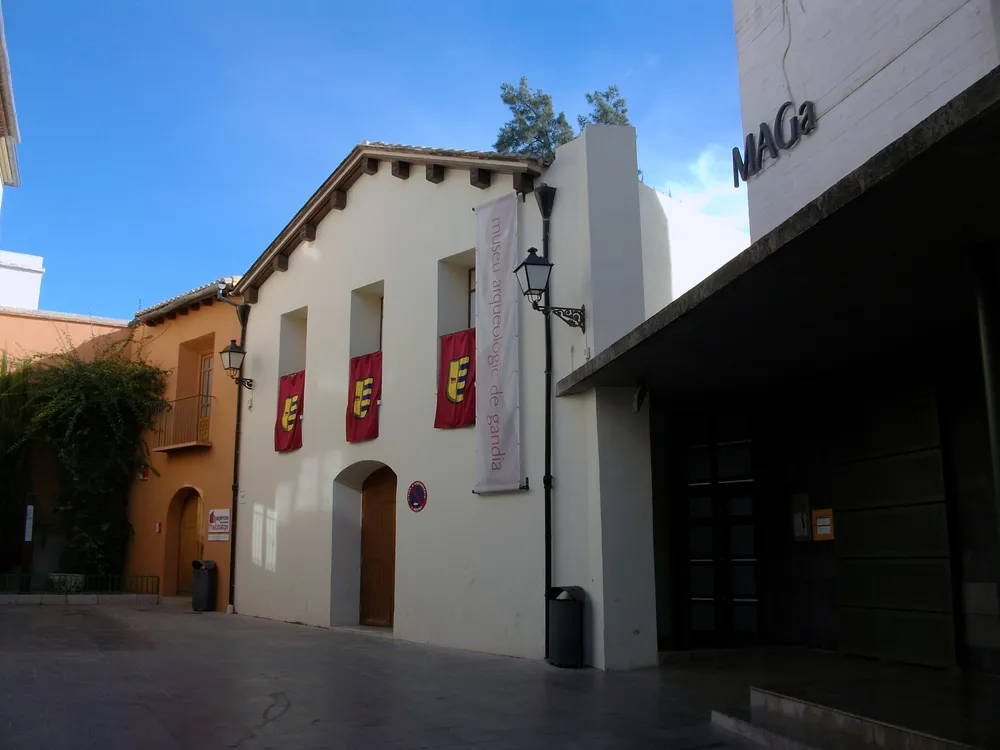
Museu Arqueològic de Gandia (MAGa)
Archaeological museum housed in the old Hospital de Sant Marc, a building founded in the 14th century by Alfons el Vell, first Duke of Gandia. Devoted to the prehistory of La Safor, it gathers finds from European-class sites such as the Cova del Parpalló —source of one of the world's largest collections of Palaeolithic portable art— and the Cova de Bolomor. A window onto the oldest human settlement in the area.
The Museu Arqueològic de Gandia (MAGa) fills the old Hospital de Sant Marc, a building founded in the 14th century by Alfons el Vell, first Duke of Gandia. Few museum buildings carry as much history as the pieces they hold.
What you see inside
The museum is devoted to the prehistory of La Safor and gathers finds from two sites of European importance. The Cova del Parpalló is the source of one of the world's largest collections of Palaeolithic portable art: small stone plaques engraved and painted tens of thousands of years ago. The Cova de Bolomor supplies evidence of the oldest human settlement in the area, including the early use of fire.
Planning a visit
It is a manageable museum, perfect for grasping where the region's human history begins before you tour the city's monuments. If the prehistory grabs you, round off the day at the Paratge Natural de Parpalló-Borrell, where the cave that many of these pieces came from opens up.
Frequently asked questions
Is admission to the MAGa free?
No, the visit has a fee; it is best to check opening times and prices before going.
Where is the Museu Arqueològic de Gandia?
In the former Hospital de Sant Marc, a 14th-century building founded by Alfons el Vell, in Gandia's historic centre.
What can you see at the MAGa?
It is devoted to the prehistory of La Safor and gathers pieces from top European sites, such as the Cova del Parpalló —source of one of the world's largest collections of Palaeolithic portable art— and the Cova de Bolomor.
Comments
Sign in with Google to comment and rate
What did you think? Be the first to share it.