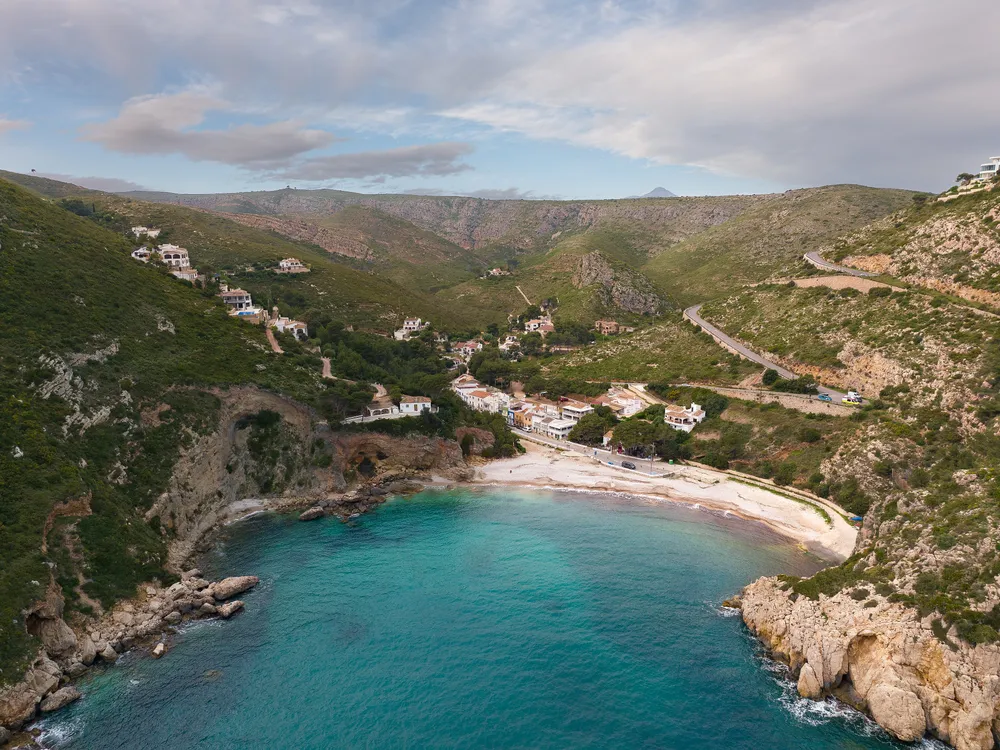
Cala de la Granadella
A cove of white pebbles and turquoise water between cliffs and pine woods, voted best beach in the Comunitat Valenciana by National Geographic. It sits next to the Cap de Sant Antoni marine reserve, with good conditions for diving and snorkelling.
At the southern tip of Xàbia, where the Marina Alta drops down to the sea, is one of the most celebrated coves on the Valencian coast: the Cala de la Granadella. A small inlet of white pebbles and turquoise water, between cliffs and pine woods, chosen by National Geographic as the best beach in the Valencian Community.
The atmosphere
Don't expect fine sand here: the shore is made of pale rounded pebbles that give the water that vivid shade between turquoise and deep blue. Rock walls and pine forest reach almost to the water's edge. It's a small, sought-after cove, so it feels calm outside the peak summer hours.
Diving and snorkelling
Next to the marine reserve of the Cap de Sant Antoni, the clear, rocky seabed makes for good diving and snorkelling. A simple mask is enough to see the underwater life just a few metres from the shore.
Tips for your visit
- Bring water shoes: the pebbles can be uncomfortable to walk on barefoot.
- In summer the car park fills up early; arrive early or consider the shuttle service set up in high season.
- Don't forget water, shade and a snorkelling mask to make the most of the seabed.
- Pair your visit with the old town of Xàbia and other nearby beaches.
Frequently asked questions
Is Cala de la Granadella sandy or pebbly?
It's a cove of white pebbles, not fine sand. Those pale stones give the water a turquoise tone.
Why is Cala de la Granadella famous?
National Geographic named it the best beach in the Valencia region. It's framed by cliffs and pine woods at the southern tip of Xàbia.
Can you dive or snorkel at La Granadella?
Yes, it sits next to the Cap de Sant Antoni marine reserve and is a paradise for diving and snorkelling.
Also nearby
You might also like
Cala de la Granadella has a fuller guide on our sister site, dedicated to Alicante province.See it on FindeAlicante →
Comments
Sign in with Google to comment and rate
What did you think? Be the first to share it.