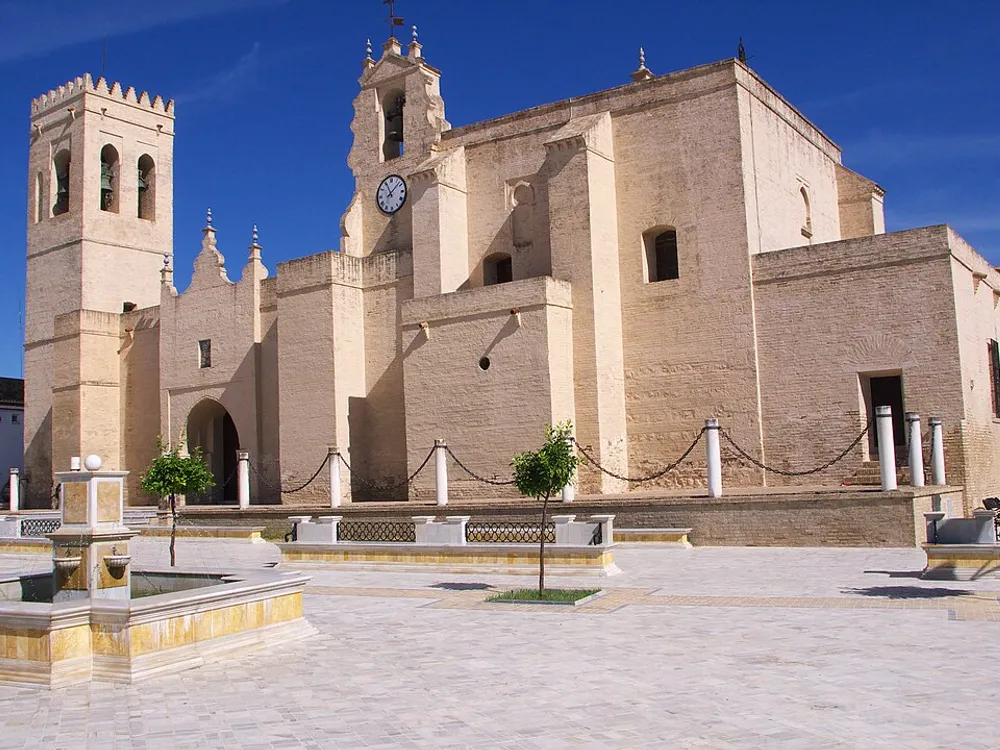
Iglesia-Fortaleza de San Bartolomé
A 15th-century Gothic church that looks like a fortress, built in local tosca stone with battlements, machicolations and arrow slits to fend off Barbary pirate raids. It stands in the old town of Xàbia, a listed National Historic Monument, and free to enter.
The Church-Fortress of Saint Bartholomew dominates Xàbia's old town and is one of the few fortified churches left standing in the Marina Alta. Built from the area's sturdy tosca stone, its outline of battlements, machicolations and narrow arrow slits shows that here faith and defence went hand in hand. Entry is free, and it is worth a stop if you are wandering the cobbled lanes of the historic centre.
History
Raised in the 15th century in the Gothic style typical of Valencian lands, San Bartolomé was built both as a house of prayer and as a refuge for the townspeople. In those centuries the coast lay exposed to raids by Barbary corsairs, and the church was designed with thick walls and defensive features to shelter residents in the event of an attack. This dual role earned it the status of National Historic Monument, a recognition of its heritage value.
What to see
- The battlements and machicolations crowning the building, more castle than church.
- The arrow slits cut into the stone, designed for defence.
- The sober Gothic interior, with vertical lines and a quiet, recollected atmosphere.
- The tosca-stone façade, which shifts in tone with the light of day.
Tips for your visit
Entry is free, so you only need to respect the opening hours and times of worship. Pair it with a stroll through Xàbia's old town and, if you have time, head down to the Granadella cove to round off a day spent between historic stone and turquoise sea.
Frequently asked questions
How much does it cost to enter the Church-Fortress of San Bartolomé?
Entry is free. It's a must-see stop as you wander the narrow streets of Xàbia's old town.
Where is the Church-Fortress of San Bartolomé?
In the heart of Xàbia's old town, in the Marina Alta, surrounded by cobbled streets.
Why does the church look like a fortress?
It's a 15th-century Gothic church built in local tosca stone, with battlements, machicolations and arrow slits to withstand attacks by Barbary corsairs. It is listed as a National Historic Monument.
Also nearby
You might also like
Iglesia-Fortaleza de San Bartolomé has a fuller guide on our sister site, dedicated to Alicante province.See it on FindeAlicante →
Comments
Sign in with Google to comment and rate
What did you think? Be the first to share it.