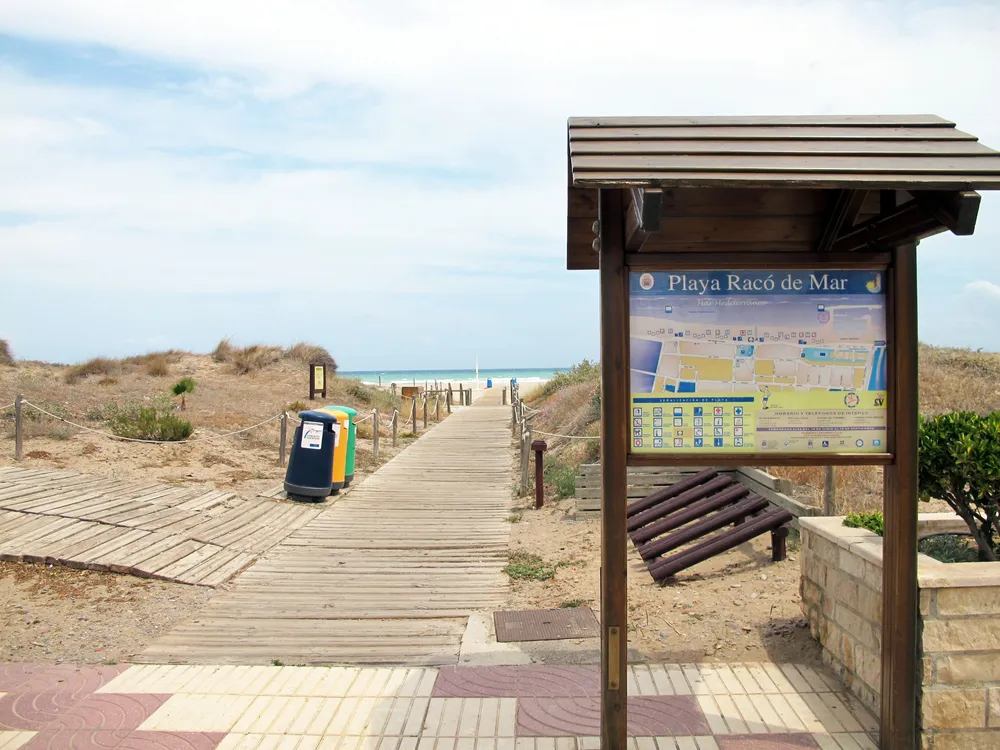
Cordó dunar de Canet d'en Berenguer
A living dune ridge running parallel to the sea, from Puerto Siles to the boundary with Sagunt, along roughly 1,200 metres of Racó de Mar beach. One of the few dune systems to survive the urbanisation of this coast, it shelters plants such as marram grass (Ammophila arenaria) and sea carrot, and is a refuge for the Kentish plover, which nests in the sand.
Along roughly 1,200 metres of Racó de Mar beach, between Puerto Siles and the boundary with Sagunt, a living dune ridge survives parallel to the sea in Canet d'en Berenguer. It is one of the few dune systems that the urbanisation of this coast never erased, which is exactly why it is worth seeing slowly.
What to look for in the dunes
The ridge holds together thanks to its plant life. Here grow marram grass (Ammophila arenaria), whose roots bind the sand, and sea carrot, both adapted to salt and wind. The Kentish plover nests in the sand, a small bird that lays its eggs straight on the ground, which is why every step counts.
Visiting
- Do not step on or cross the dunes: the vegetation that fixes them is fragile and the plover's nests sit flush with the sand.
- Walk along the shoreline or on the boardwalks, not through the ridge itself.
- Early or late-afternoon light brings out the relief of the sand.
It is a free, open-air plan that rounds off a day on Canet beach. If you are after more nature without spending near València, it fits the guide to free things to do in València.
Frequently asked questions
Where is the dune ridge of Canet d'en Berenguer?
It runs parallel to the sea for around 1,200 metres along the Racó de Mar beach, from Puerto Siles to the boundary with Sagunt.
What wildlife and plants can you see?
It preserves plants such as marram grass (Ammophila arenaria) and sea carrot, and shelters the Kentish plover, which nests directly on the sand.
Can you walk on the dunes?
Better not to step on them: the vegetation that holds them together is fragile and there are nests in the sand, so admire them without crossing.
Comments
Sign in with Google to comment and rate
What did you think? Be the first to share it.