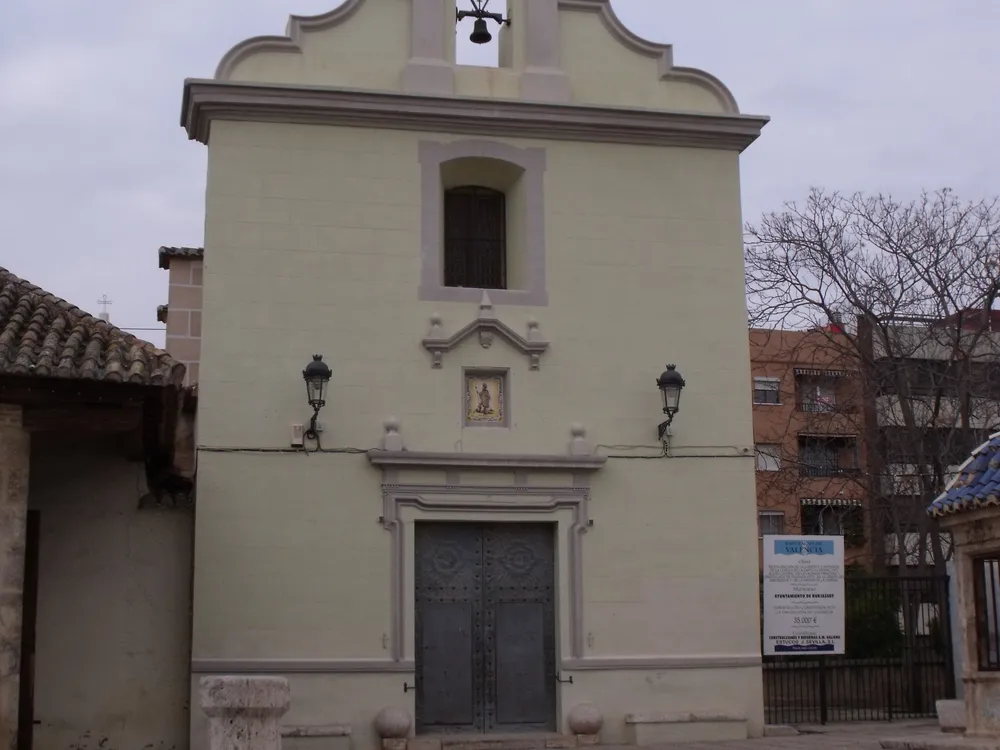
Ermita de Sant Roc
A small chapel on a rise beside the Patio de los Silos, with an early shrine that may date back to the 16th century. In 1604 Saint Juan de Ribera donated the image of the Virgen de la Cabeza, patron of Burjassot, prompting the temple's reform to place her as titular figure, flanked by images of Christ and of Saint Roch, patron of the town. Its painted decoration dates from the 18th century.
The Ermita de Sant Roc crowns the same hill as the Patio de los Silos, in Burjassot. The original shrine may go back to the 16th century, which makes it one of the oldest buildings in the town.
A little history
The turning point came in 1604, when Archbishop Saint Juan de Ribera donated the image of the Virgen de la Cabeza, patron of Burjassot. The church was remodelled to set her as its titular figure, and today she stands flanked by images of Christ and of Saint Roch, the town's patron. The painted decoration that survives is from the 18th century.
What to see nearby
The chapel is small, so it pairs well with a descent into the silos and a walk through the old quarter. On a day trip from Valencia, it makes a quiet, free stop a short hop from the city.
Frequently asked questions
Where is the Ermita de Sant Roc?
It crowns the same hill as the Patio de los Silos in Burjassot, so the two are easy to visit together.
How old is the Ermita de Sant Roc?
Its original shrine may date back to the 16th century, making it one of the oldest buildings in Burjassot, with painted decoration from the 18th century.
What is venerated in the Ermita de Sant Roc?
In 1604 Saint John of Ribera donated the image of the Virgen de la Cabeza, patron of Burjassot, which now presides over the church flanked by images of Christ and Saint Roch.
Comments
Sign in with Google to comment and rate
What did you think? Be the first to share it.