Església i Convent de les Agustines (de Sant Agustí)
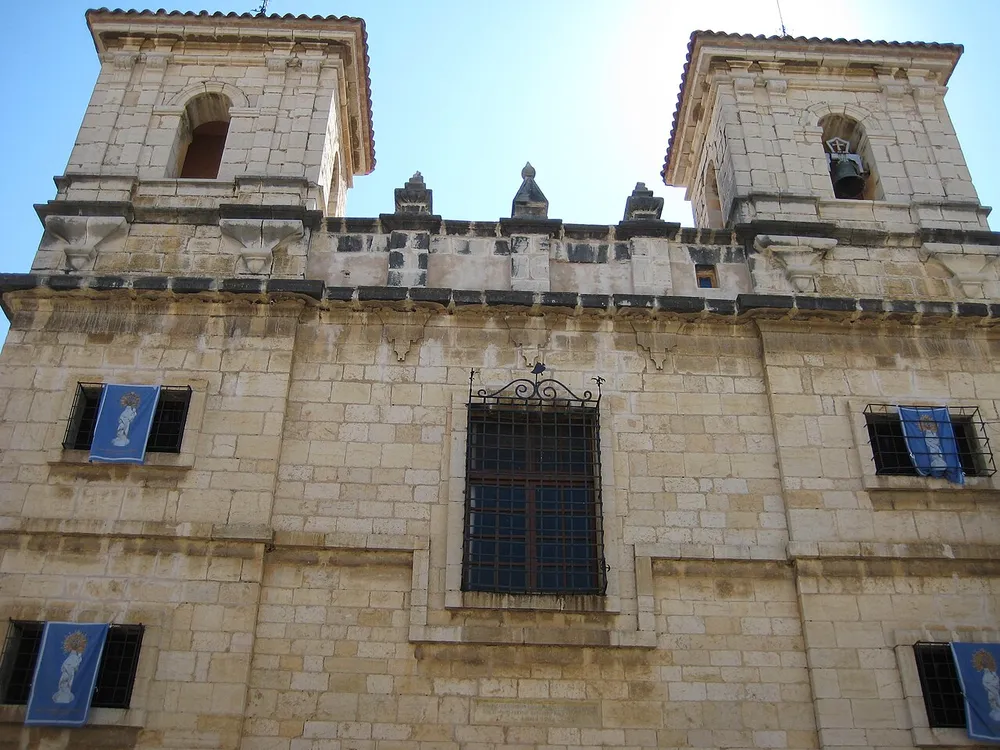
A convent founded in 1595 with nuns who came from Mirambel, its church built between 1701 and 1708 in a Baroque key. Striking for its symmetrical three-tier façade divided by cornices, crowned by twin towers and fronted by a three-arched Tuscan-order portico, it is one of the town's most distinctive religious sights.
In the heart of Morella's historic old town, the Church and Convent of the Augustinian Nuns (de San Agustín) is one of the most distinctive religious sights in the village. Its community was founded in 1595, with nuns arriving from Mirambel, and the church we admire today was built between 1701 and 1708 in a fully Baroque idiom, leaving an unmistakable mark on this walled hill town's skyline.
History
The convent was established in the late 16th century, when a community of nuns from Mirambel settled in Morella in 1595. Already into the 18th century, between 1701 and 1708, its church was constructed, dates that place it at the height of the Baroque period. It forms part of the rich monastic heritage that shaped the spiritual life of this mountain village for centuries.
What to see
The most striking feature is its symmetrical façade, arranged in three tiers separated by cornices and crowned by twin towers. At its base opens a portico of three arches in the Tuscan order, a device that frames the entrance and reinforces the solemnity of the whole.
Tips for your visit
- Pair it with a stroll through the old town, its arcaded streets and the monumental ensemble of the village.
- As a religious space, keep your voice low and check opening hours before you go.
- Look up to appreciate the symmetry of the towers and the Tuscan arches of the portico.
Frequently asked questions
Is the Church and Convent of the Augustinian Nuns free?
Yes, it's listed as a free-access visit. It stands in the heart of Morella's old town.
When was the Augustinian convent founded?
The community was founded in 1595 with nuns who came from Mirambel, and the church we admire today was built between 1701 and 1708 in a fully Baroque style.
What stands out about its façade?
Its symmetrical façade of three tiers separated by cornices is striking, topped by twin towers and with a portico of three Tuscan-order arches, one of the town's most distinctive religious sights.
Comments
Sign in with Google to comment and rate
What did you think? Be the first to share it.