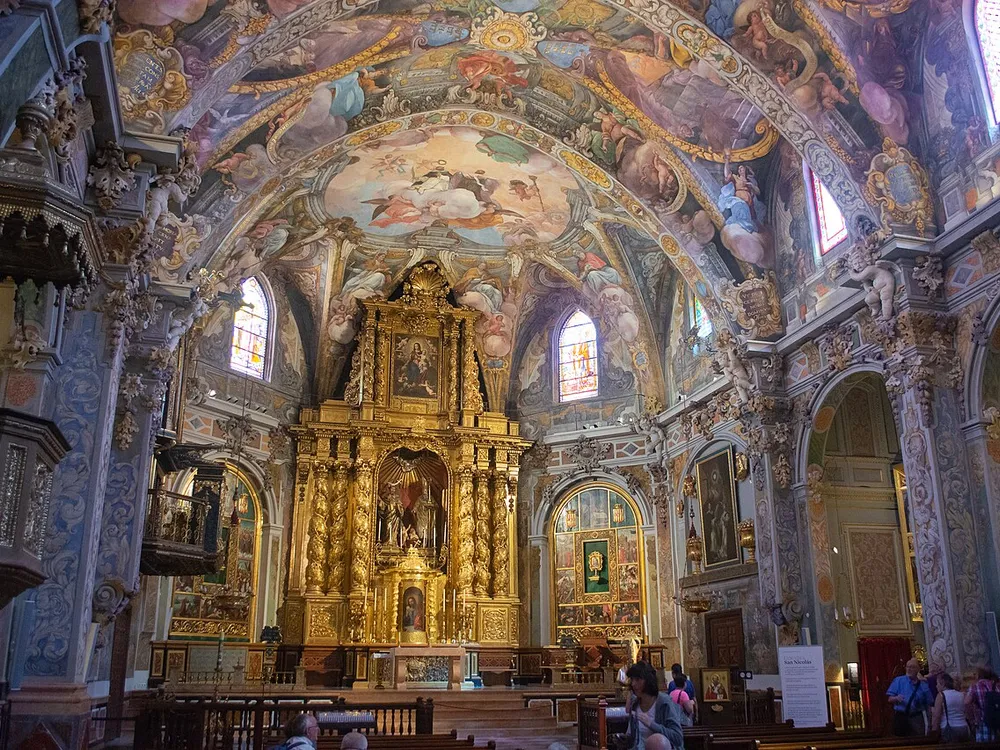
Iglesia de San Nicolás de Bari y San Pedro Mártir
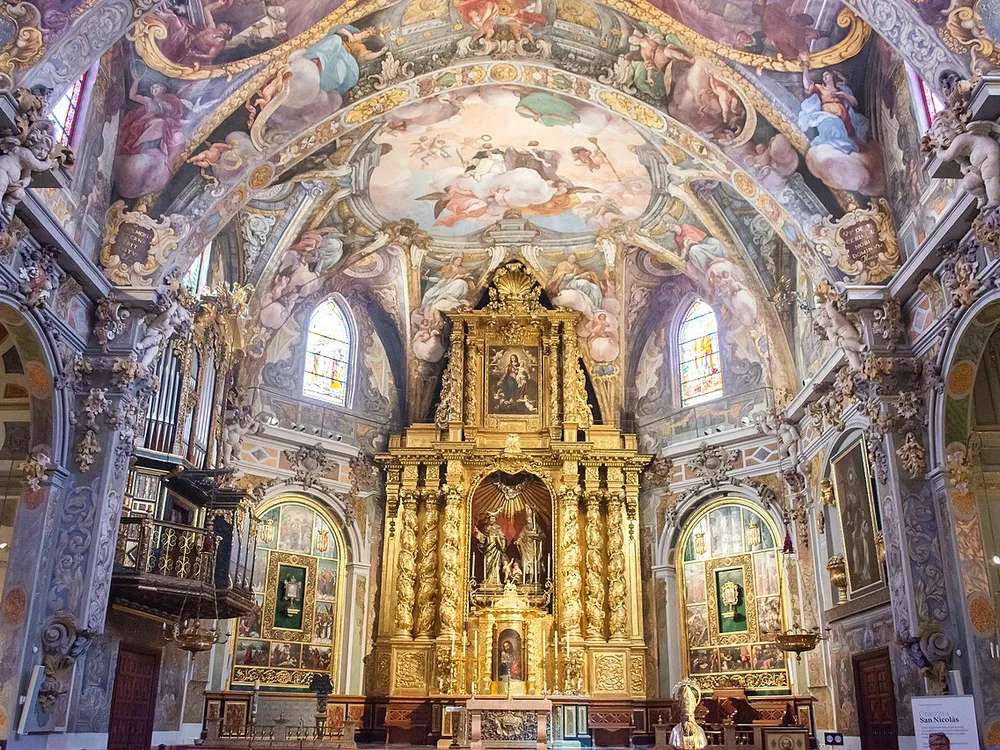
Known as the "Valencian Sistine Chapel", this Gothic church covers its interior in Baroque frescoes by Dionís Vidal, painted to designs by Antonio Palomino. After the 2016 restoration, its 2,000-plus square metres of painting are visible again under a light show. The tourist visit requires a paid ticket.
It sits on a narrow lane in the old town, between Carrer dels Cavallers and the small Plaza de San Nicolás, and looks modest from the street, easy to miss. Cross the threshold and look up, though, and the ceiling fills with colour at once: more than 2,000 square metres of Baroque frescoes covering the entire vault. It is no accident that people call it the Valencian Sistine Chapel, a nickname reportedly coined by the Vatican's own Sistine Chapel curator, who was left speechless on his visit.
History and architecture
Under the Baroque surface is a 15th-century Gothic structure, built over an earlier parish church. Between 1690 and 1693, architect Juan Bautista Pérez Castiel covered the interior in sgraffito, stucco and reliefs that look almost sculpted. The bigger transformation came after: canon Vicente Victoria and Archbishop Rocabertí called in master Antonio Palomino, court painter to Charles II, to design the pictorial scheme. His Valencian pupil Dionís Vidal painted the frescoes between 1697 and 1700.
What to see
The vault tells the life of the two patrons, Saint Nicholas of Bari and Saint Peter Martyr, across twelve lunettes. Look at the wall above the entrance, next to the large rose window: Palomino and Vidal are portrayed there themselves, almost like a hidden signature. The full restoration in 2016 brought back a brightness that had been dulled for centuries under candle soot.
Practical tips
Tourist visits require a paid ticket and include an audio guide; worshippers can enter free during services. It is a few minutes' walk from the Silk Exchange and the Cathedral, so it fits easily into a walk through the centre. Go mid-morning, when light comes through the stained glass.
Insider tip: bring binoculars or use your phone's zoom. The finest details sit fifteen metres up and are easy to miss with the naked eye. To keep the Baroque theme going, pair it with Santos Juanes, also painted by Palomino's circle. For more ideas, see the guide on what to do in València.
Frequently asked questions
Do you have to pay to visit the church of San Nicolás?
Yes, the tourist visit requires a paid ticket; it's best to check prices and hours on the official website.
Where is the church of San Nicolás?
It's in a narrow lane of València's old town, between Carrer dels Cavallers and Plaça de San Nicolás, in the Barri del Carme.
Why is San Nicolás called the 'Valencian Sistine Chapel'?
Because its Gothic interior is covered with over 2,000 m² of dazzling Baroque frescoes by Dionís Vidal to a design by Antonio Palomino; after an exemplary restoration they shine again under a light show.
Comments
Sign in with Google to comment and rate
Be the first to comment.