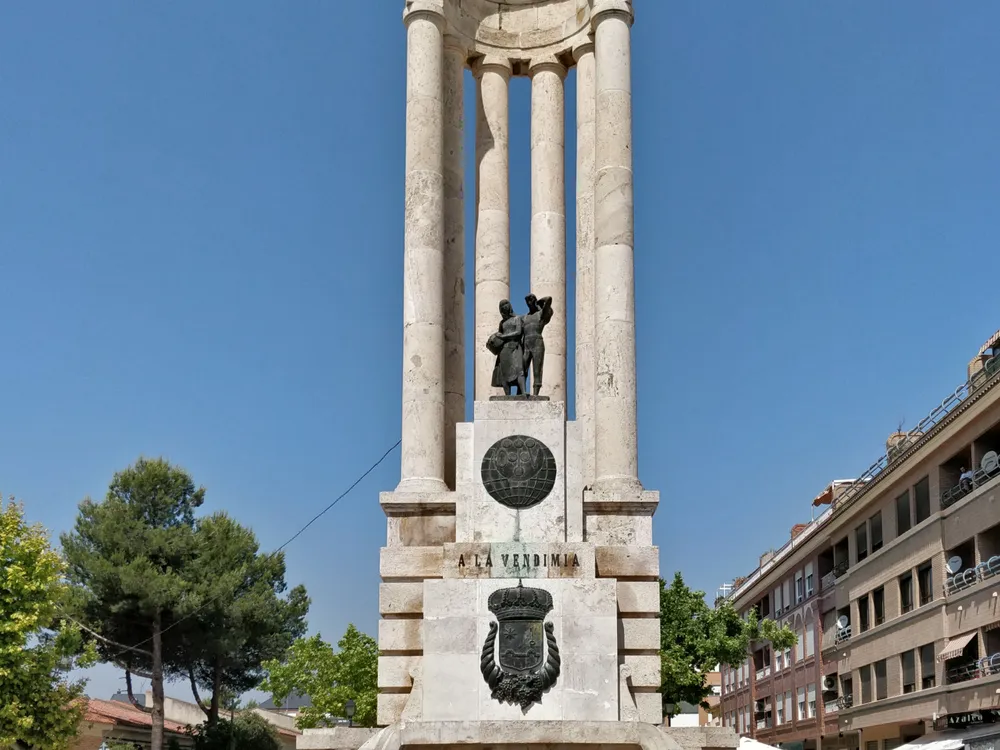
Monumento Universal a la Vendimia
A large monument some 18 metres tall on Avenida del Arrabal, by architect Ricardo Rosso and sculptor Esteve Edo, whose first phase was inaugurated in 1972. Recognised by the International Organisation of Vine and Wine as the only monument in the world dedicated to the grape harvest, it symbolises the historic winemaking tradition of the Requena-Utiel region. Together with the Fuente de los Patos and the Fuente de Colores it anchors the town's most emblematic urban axis.
It stands about 18 metres tall, and the International Organisation of Vine and Wine recognises it as the only monument in the world devoted to the grape harvest. The Monumento Universal a la Vendimia rises on Avenida del Arrabal in Requena, and it makes plain what this region lives on.
Who made it
It is the work of architect Ricardo Rosso and sculptor Esteve Edo, and its first phase was inaugurated in 1972. It distils the winemaking tradition of the Requena-Utiel region, one of the great vineyard areas of the Valencian interior, into a piece that has become a symbol of the town.
The setting
Together with the Fuente de los Patos and the Fuente de Colores, the monument anchors Requena's most recognisable urban axis, ideal for a stroll at dusk. To really understand the local wine, pair it with the Wine Museum at the Palacio del Cid.
Frequently asked questions
What is Requena's Universal Monument to the Grape Harvest?
A large monument about 18 metres tall, recognised by the International Organisation of Vine and Wine as the only one in the world dedicated to the grape harvest. It symbolises the wine-making tradition of the Requena-Utiel district.
Where is the Monument to the Grape Harvest?
On Requena's Avenida del Arrabal, beside the Fuente de los Patos and the Fuente de Colores, anchoring the city's most emblematic urban axis.
Who made it and when was it unveiled?
It is the work of architect Ricardo Rosso and sculptor Esteve Edo, and its first phase was unveiled in 1972. It can be seen freely in the street, at no cost.
Comments
Sign in with Google to comment and rate
What did you think? Be the first to share it.