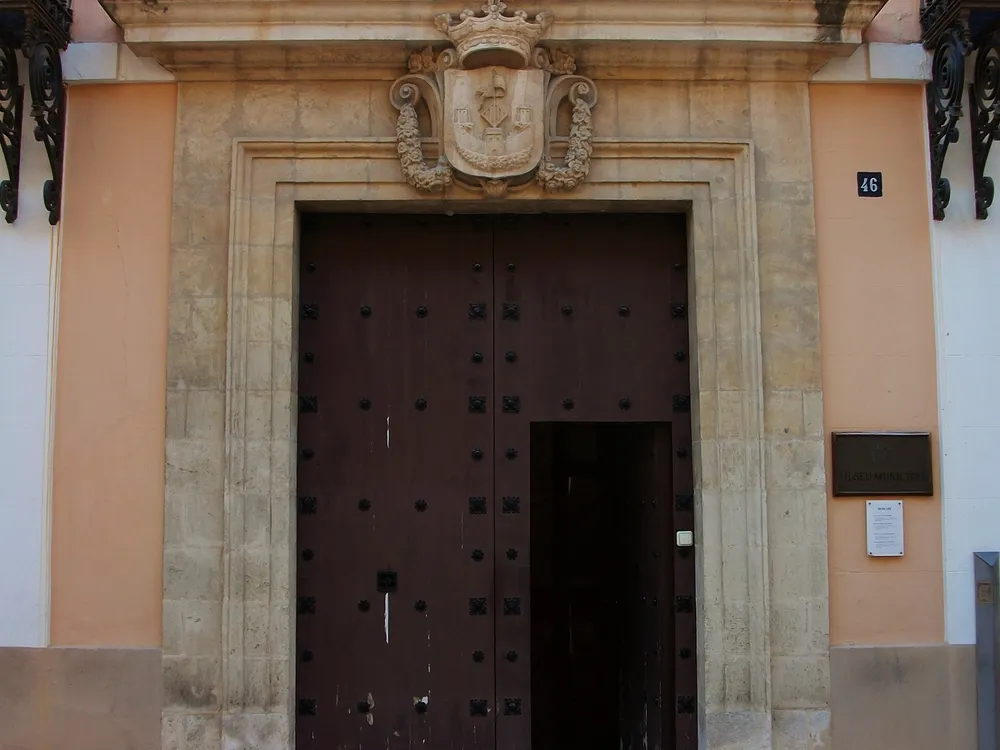
Museu de l'Almodí (Museu de la Ciutat)
Xàtiva's city museum occupies the Almodí, the old grain exchange built in the mid-16th century, with an original Gothic façade and a Renaissance patio of Ionic columns. It traces the city's history from the Palaeolithic to the Islamic period, and among its standout pieces is an 11th-century Arab basin of pink Buixcarró marble.
When Xàtiva built a grain exchange in the mid-16th century to store and sell wheat, nobody guessed the building would one day keep the memory of the whole city. Today the Museu de l'Almodí fills that old almodí, the city museum of Xàtiva, a few steps from the cathedral in the old town, with its original Gothic façade and a Renaissance courtyard of Ionic columns worth crossing slowly.
What to see
The route tells the city's story from the Palaeolithic to the Islamic period. The piece visitors remember most is an 11th-century Arab basin carved from pink Buixcarró marble, the noble stone of the area. It is a museum you can take in under an hour, yet it makes plain why Xàtiva spent centuries among the most important cities of the Kingdom of Valencia.
Planning your visit
Admission is ticketed, and it pairs well in a single day with the Castell de Xàtiva. If you are coming on a day trip from València, start your morning here before climbing up to the castle.
Frequently asked questions
How much is admission to the Museu de l'Almodí?
The museum charges admission. Check the current price and opening hours on the official site before visiting.
What can you see at the Museu de l'Almodí?
It traces the city's history from the Paleolithic to Islamic times; a highlight is an 11th-century Arab basin carved in pink Buixcarró marble.
What was the Almodí building?
It is the old grain exchange built in the mid-16th century, with its original Gothic façade and a Renaissance courtyard of Ionic columns.
Comments
Sign in with Google to comment and rate
What did you think? Be the first to share it.