What to see in Xàtiva
Xàtiva is one of the most history-rich day trips near València: a monumental town with a huge castle on the hill above it. Barely an hour from the centre, it makes for a full day among medieval lanes, fountains, churches and views over the countryside.
The Castle of Xàtiva is the main draw: a double fortress sprawling along the ridge, with a lower castle of Iberian and Roman roots and a medieval upper castle, joined by walls that seem to go on forever. Below, the old town holds the Collegiate Basilica of Santa María (La Seu), the Hospital Reial with its Gothic-Renaissance façade, and the church of Sant Feliu, one of the oldest. Xàtiva is also the birthplace of Spain's only two popes, the Borgias: Calixtus III and Alexander VI.
How to get there from València
The easiest option is the train: there are direct services almost every hour from Estació del Nord, taking around 55-60 minutes. By car along the A-7/A-35 it's just under an hour.
Local tip
LOCAL TIP: in the Museu de l'Almodí hangs a portrait of Philip V upside down, placed that way as a symbolic punishment for ordering the city burned in 1707. It's a favourite local joke in Xàtiva. Climb up to the castle early to dodge the heat and harsh light.
If you're into day trips, see our guides to day trips from València and pretty villages near València. You might also like Bocairent or more villages.
Compare all towns by transport →
-
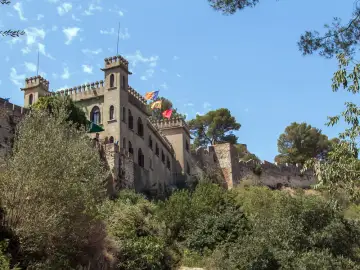 Town · FREEXàtivaRegión — La Costera (a unos 60 km de València)
A noble town of stately streets, fountains and palaces in the La Costera district, birthplace of the Borgia popes.
-
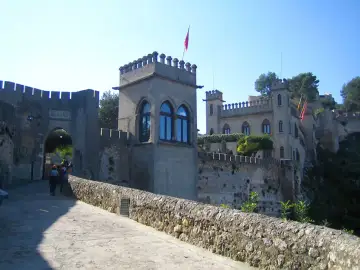 CastleCastell de XàtivaXàtiva — La Costera, sobre la serra del Castell · 💶 €6 general · €4 reduced · free up to age 7
The Castle of Xàtiva is not one fortress but two: the Ibero-Roman Castell Menor and the medieval Castell Major, on the mountain above town.
-
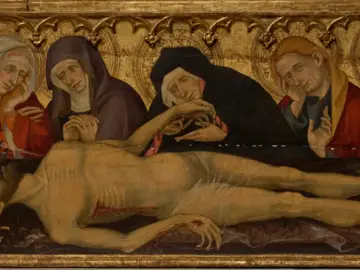 Monument · FREECol·legiata Basílica de Santa María (La Seu)Xàtiva — casc històric, davant l'Hospital Reial
A Renaissance and Baroque church known as La Seu, raised over a former mosque and still unfinished after centuries of work.
-
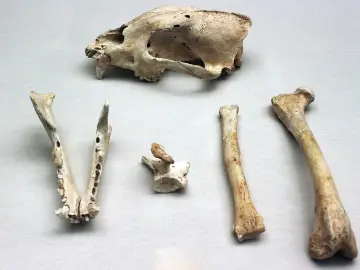 Beach & nature · FREELa Cova Negra i l'Estret de les AigüesXàtiva — riu Albaida, serra Grossa
A municipal natural site in the gorge the river Albaida carves through the mountains, with a cave once home to Neanderthals and a reference…
-
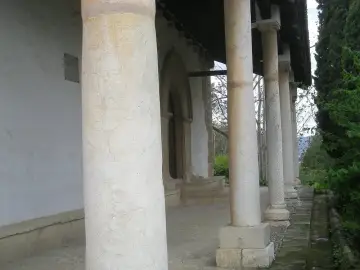
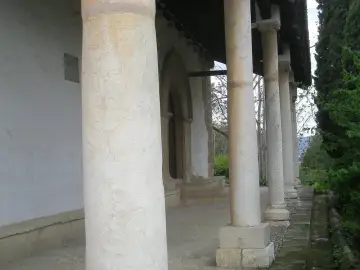 Church · FREEEsglésia de Sant Feliu (San Félix)Pujada al Castell, ladera bajo el castillo
It was built in 1265 over the remains of a Visigothic cathedral and is one of the oldest churches in the former Kingdom of Valencia, as…
-
 Church · FREECapella gòtica de l'Antic Hospital Major (Hospital Reial)Carrer de l'Hospital, junto a La Seu (centro)
Founded by King Jaume I, the Hospital Major has a façade that fuses late Gothic with early Renaissance, a record of its different building…
-
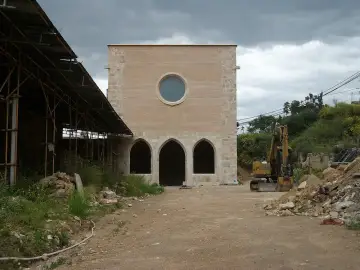 Church · FREEEsglésia del Reial Convent de Sant Domènec (Santo Domingo)Carrer de Sant Domènec, casco antiguo
The Dominican convent was founded in the late 13th century with the favour of the Crown of Aragon, especially James II.
-
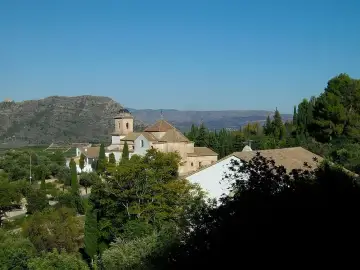 Church · FREEErmita de Sant JosepEntre la antigua medina y la ciudad cristiana, casco histórico
A small Baroque chapel from the late 18th century, built by the city's carpenters' guild, with a white façade that stands out at dusk.
-
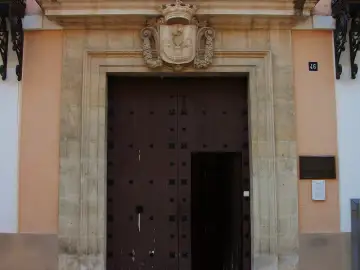 MuseumMuseu de l'Almodí (Museu de la Ciutat)Región — La Costera (a unos 60 km de València) · 💶 €4 · reduced €2 · free under 8 and on Sundays/holidays (combined ticket with the Museu de Belles Arts)
Xàtiva's city museum occupies the Almodí, the old grain exchange built in the mid-16th century, with an original Gothic façade and a…
-
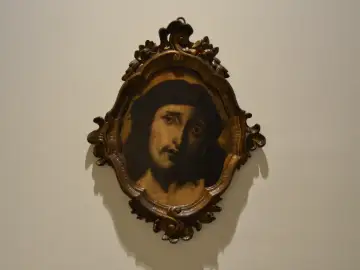 MuseumMuseu de Belles Arts (Casa de l'Ensenyança)Región — La Costera (a unos 60 km de València) · 💶 €4 · reduced €2 · free under 8 and on Sundays/holidays (combined ticket with the Museu de l'Almodí)
Housed in the Casa de l'Ensenyança, a classicist building of the mid-18th century, it holds one of the largest public painting collections…
-
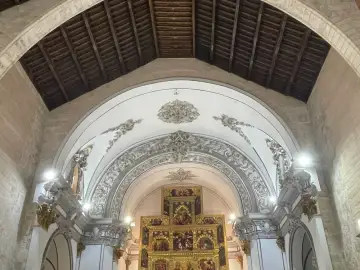 Church · FREEEsglésia de Sant PereRegión — La Costera (a unos 60 km de València)
One of Xàtiva's oldest churches, raised in the 14th century in the former market quarter in conquest-Gothic style, with a nave of diaphragm…
-
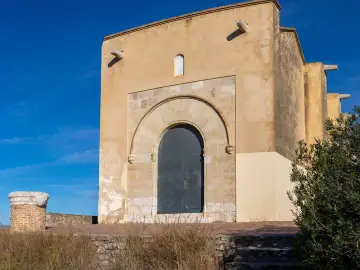 Church · FREEErmita de Santa AnnaRegión — La Costera (a unos 60 km de València)
A Gothic chapel linked to the Borja family, built in the 16th century atop Santa Anna hill overlooking Xàtiva, its rib vaults' keystones…
-
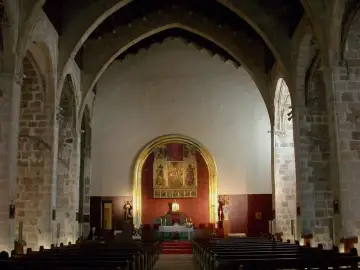 Church · FREEEsglésia de Sant FrancescRegión — La Costera (a unos 60 km de València)
A Gothic-Cistercian church from the second half of the 14th century, the sole vestige of the vanished Franciscan convent founded by Jaume…
-
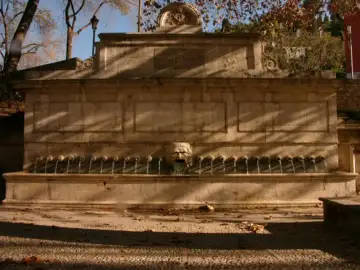 Monument · FREEFont dels Vint-i-cinc Brolladors (Fuente de los 25 caños)Región — La Costera (a unos 60 km de València)
A monumental neoclassical fountain built between 1788 and 1804 beside the church of Sant Pere, an emblem of the "city of a thousand…
-
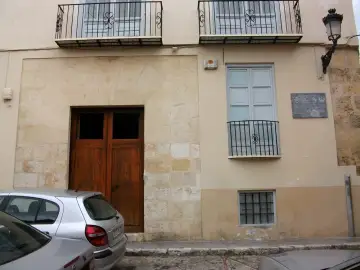 Monument · FREECasa natalícia d'Alexandre VIRegión — La Costera (a unos 60 km de València)
On the Plaça d'Alexandre VI stands the birthplace of Roderic de Borja, born around 1431 and the future Pope Alexander VI, the second…
-
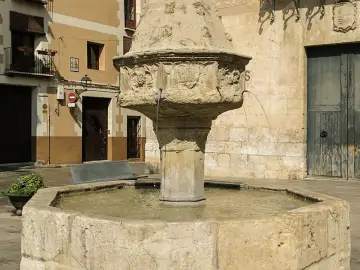 Monument · FREEPlaça de la Trinitat i Font de la TrinitatRegión — La Costera (a unos 60 km de València)
One of the most charming squares in the old town, presided over by the Font de la Trinitat, a Gothic fountain of 1403 reckoned the oldest…
Frequently asked questions
How do you get to Xàtiva from València?
The easiest option is the Cercanías C-2 train, leaving direct from València Nord. By car, take the A-7 toward Alacant. Alsa also runs a bus on the route, though with very few daily departures.
How long does it take from València to Xàtiva?
By train it's about 45 minutes on Cercanías, and around 40 minutes on the faster Regional services. By car on the A-7 it's roughly 50 minutes, depending on traffic.
What is there to see in Xàtiva?
The big hilltop Castle, with its double enclosure and views over the Costera, is the top pick. In the old town you'll find the Col·legiata de Santa María (La Seu), the church of Sant Feliu with its paintings, and museums such as l'Almodí and the Fine Arts museum.
Is Xàtiva worth visiting with kids?
Yes. Climbing up to the castle is a small adventure most children enjoy, and you can pair it with a walk through the old streets and a stop for lunch. It makes for a full, easy day trip.