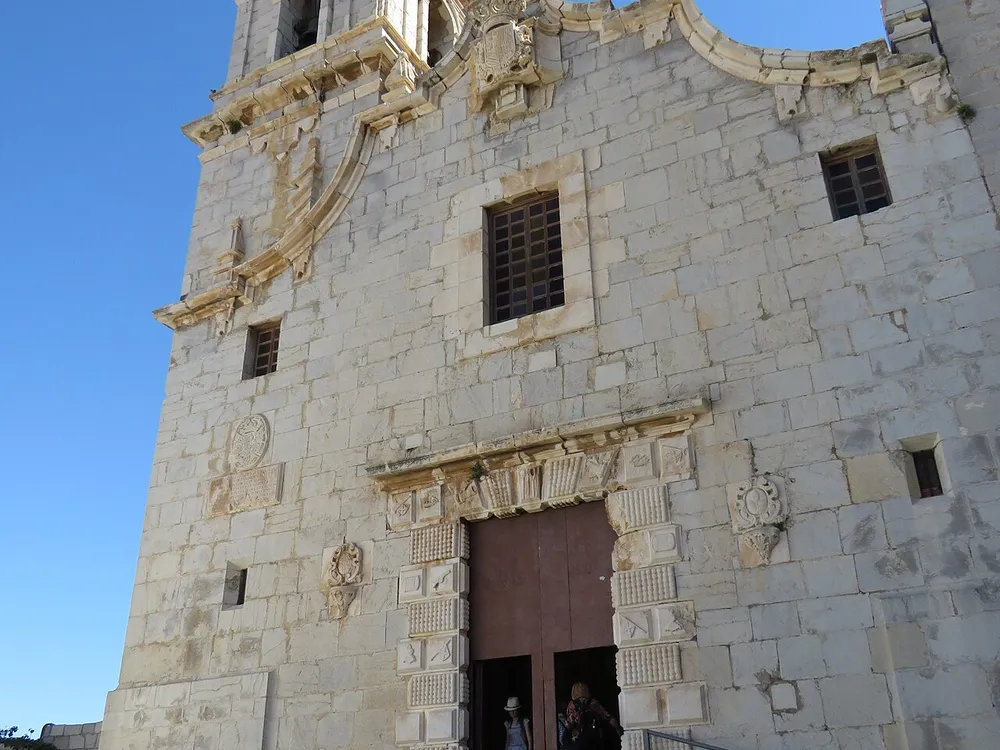
Ermita de la Mare de Déu de l'Ermitana
A small Baroque hermitage built between 1708 and 1714 beside the castle, with a square bell tower, military motifs and Philip V's coat of arms on the façade. It's Peníscola's most beloved church, home to its patron saint, and entry is free.
Set right beside the castle, at the top of Peñíscola's old town, the Ermita de la Mare de Déu de l'Ermitana is a small Baroque church that many visitors walk straight past on their way to the fortress. It's worth pausing: this is the town's most beloved church, dedicated to its patron saint, and admission is free.
History
The chapel was built between 1708 and 1714, in the middle of the Baroque period, at a time when Peñíscola held a strategic role. That is why its sober, elegant façade displays military motifs and the coat of arms of Philip V, an unusual feature for a church and a reminder of the context in which it went up. Crowned by a simple square bell tower, it sits comfortably among the stonework of the walled enclosure.
What to see
- The Baroque façade with the royal coat of arms and military emblems.
- The square bell tower, visible from several streets of the old town.
- The intimate, gathered interior, dedicated to Peñíscola's patron saint.
Tips for your visit
The chapel sits right next to the Papa Luna castle, so it makes sense to combine the two. Climb the whitewashed lanes slowly and enjoy the sea views along the way. Since entry is free, it's a good spot for a quiet pause away from the bustle of the seafront promenade. To plan the day, take a look at our day-trip ideas.
Frequently asked questions
Is the Ermita de la Mare de Déu de l'Ermitana free?
Yes, entry is free. It is Peníscola's most beloved church, dedicated to its patron saint.
How old is this chapel?
It was built between 1708 and 1714, in the heart of the Baroque period, beside the castle at the highest point of the old town.
What is special about its façade?
It is plain and elegant, with a square bell tower, military motifs and the coat of arms of Philip V, an unusual detail for a church that recalls the context in which it was built.
Comments
Sign in with Google to comment and rate
What did you think? Be the first to share it.