El Cabanyal
El Cabanyal is the neighborhood Valencia almost cut in half. In 1988 the city government proposed extending Avenida Blasco Ibáñez through the district to the sea; the 2001 PEPRI, approved under the PP city government, formalized that plan, which would have knocked down roughly 1,651 homes inside a zone with Bien de Interés Cultural protection, Spain's highest heritage designation. Residents, organized as Salvem el Cabanyal, filed 72,834 formal objections. Spain's Ministry of Culture blocked the project in 2010, and the Supreme Court killed it for good in 2014. While the case dragged through the courts, the population fell from around 30,000 in the 1970s and 80s to under 20,000 — owners had every incentive to let buildings rot while waiting for a demolition that never came.
Once that threat was gone, a different pressure took over. Prices rose along with tourism, and the share of Valencia-born residents dropped by about 20% even though the total population held roughly steady — the neighborhood didn't empty out, it changed hands. The city's newer Special Plan now caps tourist-flat conversions at 10% of housing per block and bars turning seafront buildings into hotels.
What's still standing is a grid of fishermen's houses with tiled facades, protected as a whole as a Bien de Interés Cultural since 1993 — the same neighborhood The Guardian put on its list "10 of the coolest neighbourhoods in Europe" on 8 February 2020; one secondary source ranks it third on that list, though that specific number comes from only one outlet. Underneath the tilework it's still a fishing quarter: the Mercat has sold catch straight from the Lonja since the 19th century, and Semana Santa Marinera, rooted in that fishing tradition, holds national Fiesta of Tourist Interest status. The beach out front blurs into neighboring Malvarrosa so often that day to day, the two read as one strip of sand.
What to see in El Cabanyal
Market
- Mercat del CabanyalCarrer Justo Vilar s/n
Open Monday to Saturday, 7:30am to 3pm, with a street market on Thursdays from 9am to 2pm. The first market building went up in 1869 with 52 stalls; the current Modernist structure dates to 1914 and was reshaped by a 1958 rebuild and a 2010 renovation. It has historically been the city's main point for fresh fish and shellfish.
Worth seeing
- Casa de les GàrgolesCarrer Progrés 262
Built in 1917, with white and light-blue tiles across the upper facade and light green and white below. One of the neighborhood's best-known Modernist facades.
- Casa dels TrencadissosCarrer Doctor Lluch 219
Dating to 1918, with a pink-and-green checkerboard facade.
- Casa de la Pesca del BouCarrer Mediterrani 37
Dating to 1919, one of the few facades in the neighborhood built around a narrative tile scene made of small rectangular tiles rather than trencadís.
- Playa del Cabanyal
Also called 'Las Arenas'. It runs directly against the neighborhood, bordered by Playa de la Malvarrosa to the north and the port to the south, and is unusually wide — close to 200 meters. In everyday use the two beaches blend into one strip, and 'Malvarrosa' ends up being the name people use for the whole thing.
Squares
- Plaza del Rosario (Plaza Iglesia del Rosario)
The neighborhood's civic and religious center. It is the main stage for the Ruge Rosario cultural festival and a key procession point for Semana Santa Marinera, the Holy Week tradition rooted in the fishing community and declared a Fiesta of National Tourist Interest.
Bars
- Bar CabanyalFrente al Mercat del Cabanyal
No printed menu — the waitstaff, several of them speaking Valencian, call out the day's catch straight from the fish auction. Owner Emilio Cansino opened it around 2014 and runs it deliberately by word of mouth, with no social media presence. Decor is blue and white.
Restaurants
- Restaurante AduanaPlaza Aduana, Moll de Ponent s/n
Three generations deep: it began in the 1930s as a wooden drinks kiosk for port workers, founded by Antonio del Toro and Juana Lara, with the permanent building going up in 1941. Juana's son Ramón took over in the 1970s, and since 2006 it has been run by brothers Alberto, Juan Ramón and Alejandro del Toro. Known for all i pebre and cod croquettes.
- Bodega La Aldeana 1927Carrer Josep Benlliure 258
An old bodega revived by chef Alfonso García, trained at El Poblet and La Sucursal, keeping traditional-style products: Cantabrian anchovy, morcilla from Toribio de Chirivella, titaina. The 1927 founding date the venue advertises has not been independently verified.
📍 Places
-
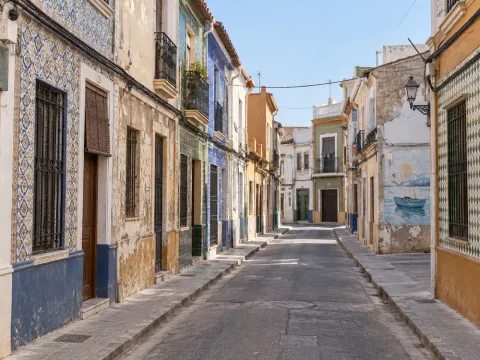 Town · FREEBarrio del CabanyalValència — El Cabanyal-Canyamelar, junto al mar
A former fishing village with streets of low houses covered in ceramic tiles and colourful trencadís, street art and old-school taverns.
-
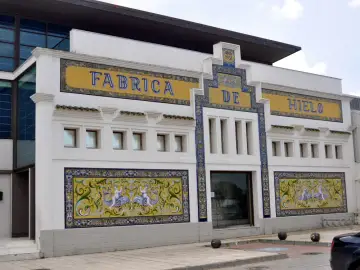 Cool venue · FREELa Fábrica de HieloValència — El Cabanyal, junto a la playa
A former ice factory at the port reborn as a cheeky cultural space, with a bar, markets, exhibitions and live concerts almost every day.
-
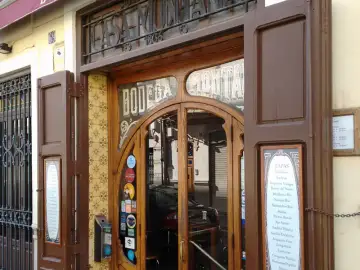 Cool venue · FREEBodega Casa MontañaValència — El Cabanyal
An 1836 tavern with century-old wooden barrels where tapas are served much as they were a hundred years ago; named Best Wine Bar in Spain…
-
 Cool venue · FREEBodega La PascualaValència — El Cabanyal
Since 1921 this Cabanyal bodega has been one of the temples of the Valencian esmorzaret, awarded the Cacau d'Or for its outsized…
-
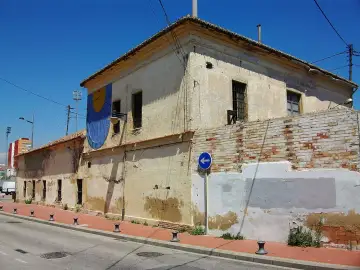 Monument · FREECasa dels BousValència — El Cabanyal-Canyamelar, primera línea de mar
Right on the seafront, this late-19th-century hall once housed the oxen that dragged the bou fishing boats up onto the sand, a trade that…