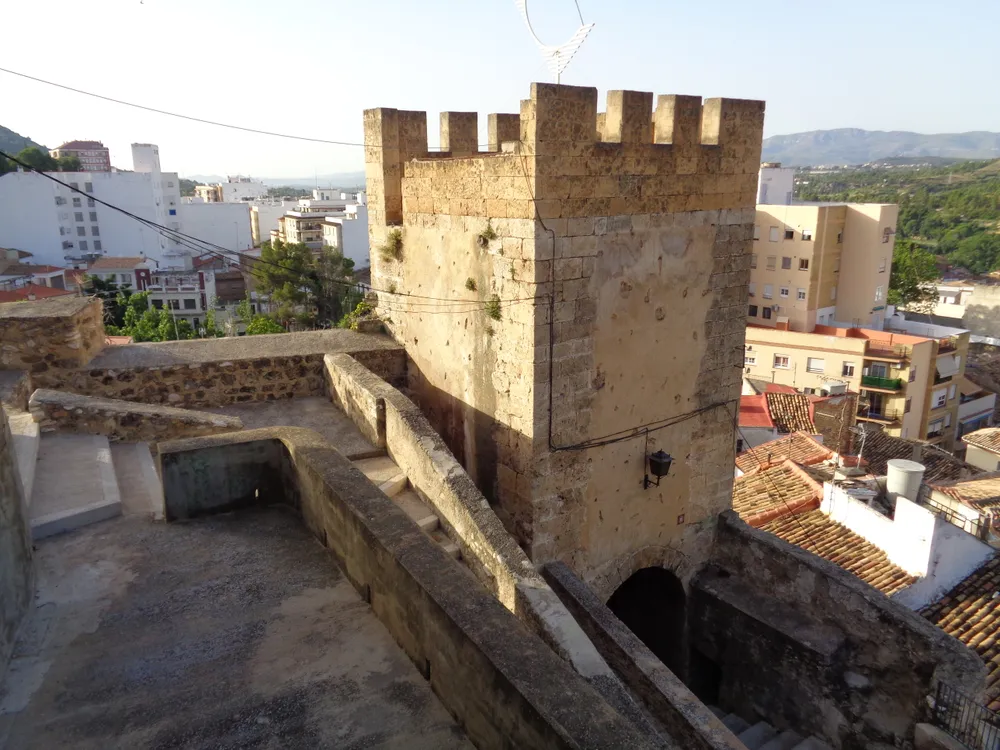
Castillo de Buñol
Medieval fortress that crowns the old town of Buñol, built in the 11th and 12th centuries and remodelled after the 13th-century Christian conquest. It is one of Spain's few fortresses that still has inhabited houses inside, contains two small museums, and its entrance is free and open every day of the year.

The Castillo de Buñol stands on a hill in the middle of the old town, with the village having grown up around it since the Middle Ages. Its origins date back to the 11th and 12th centuries; after the Christian conquest of València, in 1238 King Jaime I granted the castles of Buñol, Macastre and Monroy to the Aragonese knight Rodrigo de Lizana, as recorded in the Repartiment registers. The fortress was remodelled in the 14th century and is today one of the few in Spain with inhabited homes inside its walls.
What's inside
The complex includes the main tower, the parade ground, a Gothic palace and the 13th-century church of El Salvador, today converted into an ethnographic museum with farming tools and household objects from the 19th century. The former Palacio del Mercader, from the 14th century, houses the archaeological museum, with pieces ranging from the Palaeolithic to the Roman period. Entry to the castle is free, any day of the year, at any time.
Down from the fortress, the cobbled lanes of the Barrio del Castillo are the same ones painted by Joaquín Sorolla during the summers he spent in Buñol between 1890 and 1895. In the village, it is also in the Plaza del Pueblo that the tomato battle of La Tomatina kicks off every year — the festival that has made Buñol famous around the world.
Comments
Sign in with Google to comment and rate
What did you think? Be the first to share it.