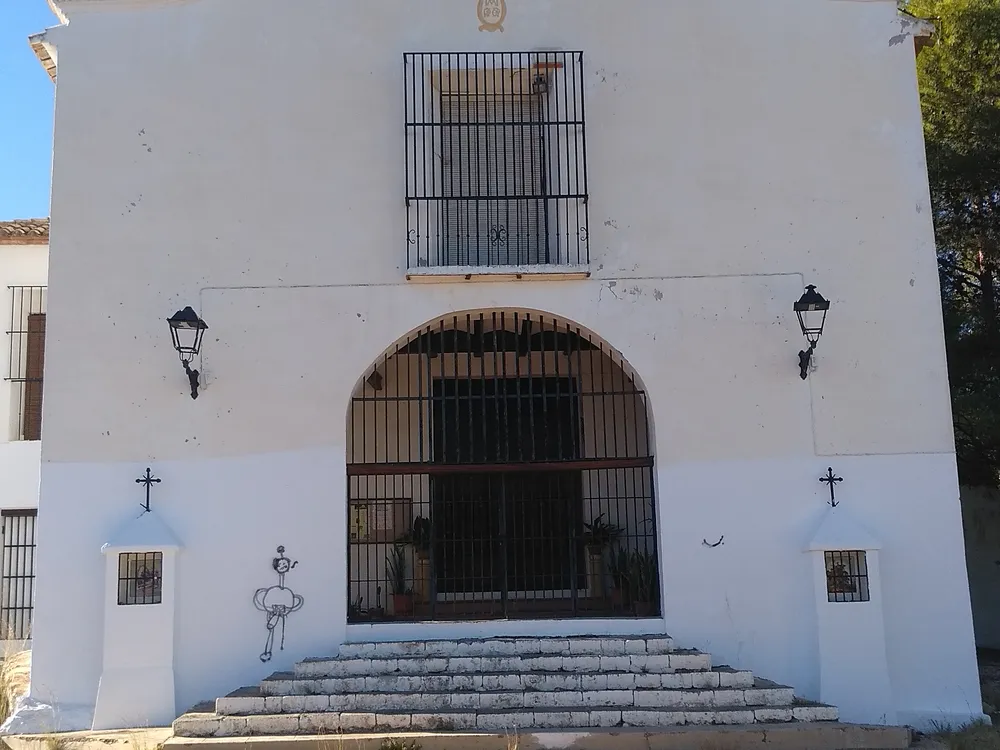
Ermita de Santa Anna
Small hermitage on a hilltop, one of the best preserved in Gandia and a natural viewpoint over the city and its fertile plain. The original chapel dates from the 14th century, though its present look comes from an 18th-century Baroque and Neoclassical remodelling; Santa Anna was Gandia's patron until 1882, when the patronage passed to Our Lady of the Forsaken. On Christmas Eve it hosts the Cant de la Sibil·la, an ancient liturgical drama sung to a Gregorian melody and revived in 1982.
Climbing up to the Ermita de Santa Anna is the simplest way to take in the whole of Gandia: the city, the fertile plain and, beyond, the sea. It is one of the best-preserved hermitages in the district and a natural viewpoint in its own right.
A bit of history
The original chapel dates from the 14th century, though its present look comes from an 18th-century Baroque and Neoclassical remodelling. Santa Anna was Gandia's patron until 1882, when the patronage passed to Our Lady of the Forsaken to match the city of València.
A living tradition
On Christmas Eve the hermitage hosts the Cant de la Sibil·la, an ancient liturgical drama sung to a Gregorian melody that foretells the end of the world. Lost for centuries, it was revived in Gandia from 1982 and is now sung at midnight Mass as well. It is one of those moments worth timing your visit around if you come at Christmas.
The climb is short and free to access, a good no-cost add-on to a day in the old town or down at the Gandia beach.
Frequently asked questions
Is it free to climb up to the Ermita de Santa Anna?
Yes, access is free.
Where is the Ermita de Santa Anna?
On a hill within Gandia's municipality; it is a natural viewpoint over the city, the farmland and the sea.
What makes the Ermita de Santa Anna special?
It is one of Gandia's best-preserved chapels; the original church is from the 14th century with an 18th-century Baroque and Neoclassical reform, and on Christmas Eve it hosts the Cant de la Sibil·la, an old liturgical drama with Gregorian melody revived in 1982.
Comments
Sign in with Google to comment and rate
What did you think? Be the first to share it.