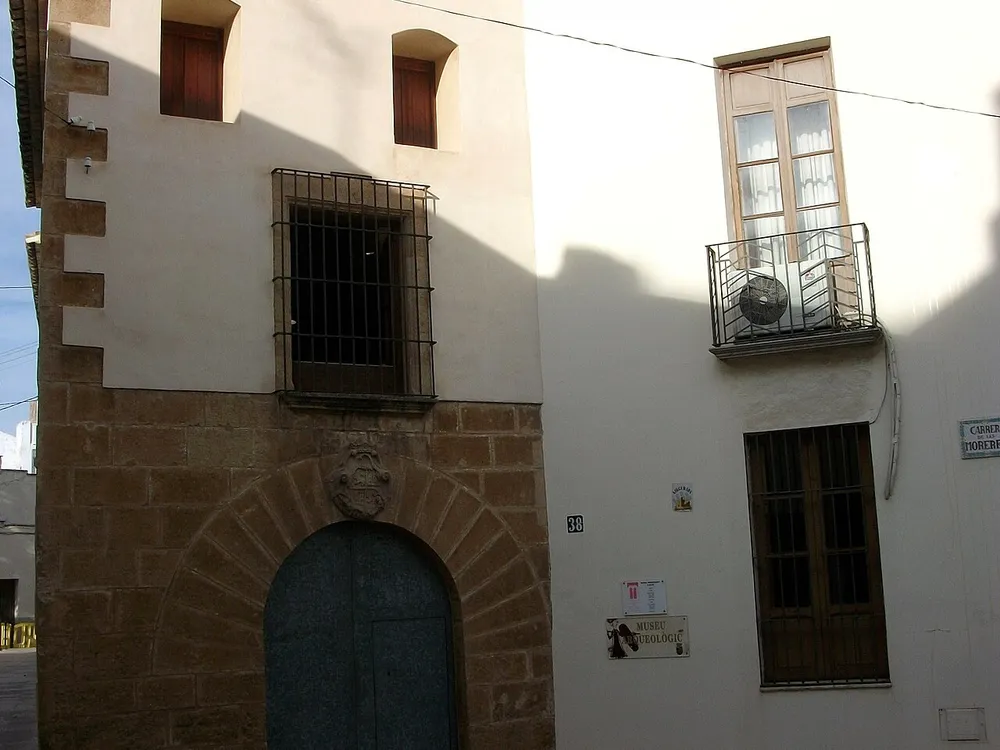
Museu Arqueològic d'Oliva
A restored manor house in the old town that walks you through Oliva's history from prehistory to the 16th century, with pieces from the vanished Palau dels Centelles. It is a small stop, worth it to understand the town's noble past.
The Museu Arqueològic d'Oliva occupies a restored manor house in the old town and traces the history of the town from prehistory to the 16th century. It is a short stop, useful for getting a sense of Oliva's past as a county seat before wandering its old streets.
What to see
The collection follows a chronological thread that helps you read the evolution of the area through the objects left behind by those who lived here. Among the highlights are pieces from the vanished Palau dels Centelles, the palace of the counts of Oliva, which recall the town's high point in medieval and Renaissance times.
- Material spanning a broad period, from prehistory to the 16th century.
- Remains tied to the town's noble and comital past.
- The building itself, a noble house repurposed as an exhibition space.
Tips for your visit
It is a short visit that pairs well with a stroll through Oliva's old town and the climb up to the Santa Ana castle. Check the opening hours before you go, as they can be limited. Find more on the Oliva page.
Frequently asked questions
Is the Museu Arqueològic d'Oliva free?
No, it is not free; it's best to check opening hours and the entry price on its official channels before visiting.
Where is the Museu Arqueològic d'Oliva?
It occupies a restored manor house right in Oliva's old town, in the La Safor region.
What can you see at the Museu Arqueològic d'Oliva?
It traces the town's history from prehistory to the 16th century, with fine pieces from the vanished Palau dels Centelles.
Comments
Sign in with Google to comment and rate
What did you think? Be the first to share it.