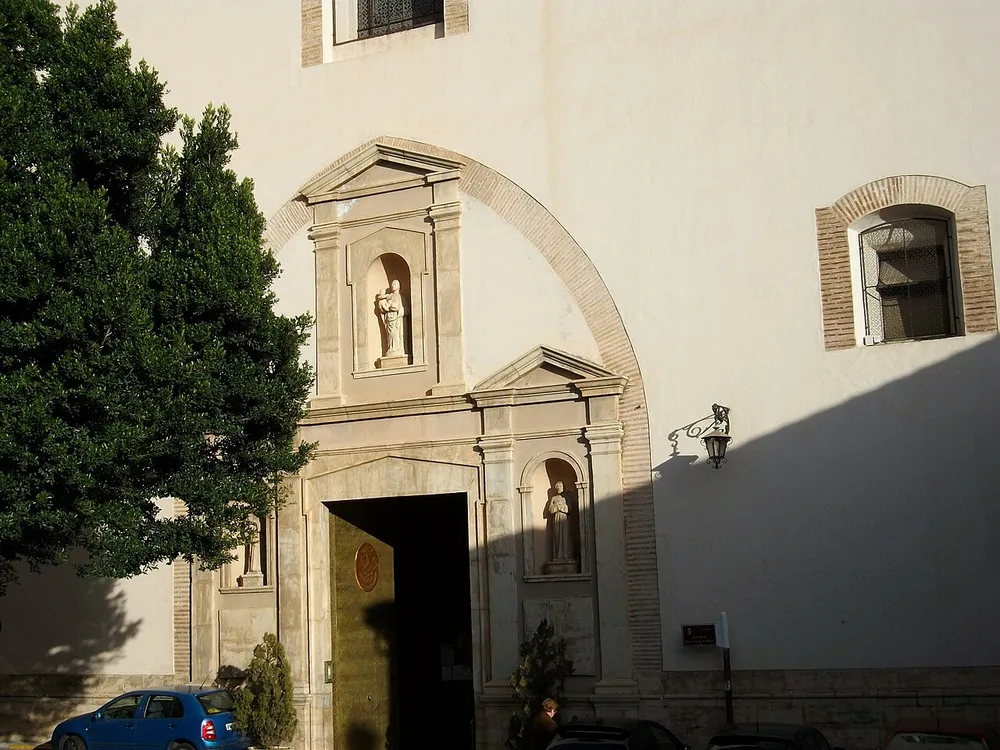
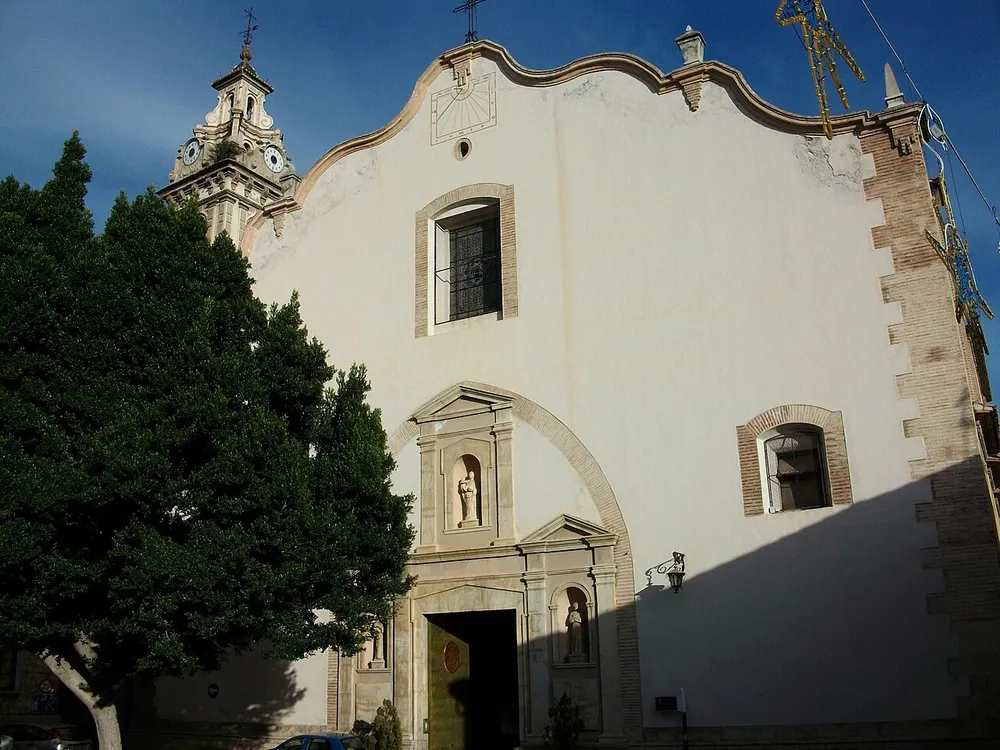
Església de Santa Maria la Major
Built largely through the 18th century (1705-1787) over an earlier Gothic church, it is one of the finest examples of Valencian architecture of its day, showing a restrained move from late Baroque to Neoclassicism. It has three naves, a spacious crypt that bridges the slope of the site, the Baroque Capella del Roser, and a small parish museum of silverwork and liturgical ornaments. Its interior is admired for the elegance of its proportions rather than for lavish decoration.
In the heart of Oliva's old town, presiding over the Plaça de l'Església, stands the Església de Santa Maria la Major, the town's main church and one of the finest examples of eighteenth-century Valencian architecture. Built for the most part between 1705 and 1787 over an earlier Gothic church, it impresses less through a profusion of ornament than through the serene elegance of its proportions.
History and architecture
The building rose over almost the entire eighteenth century, a period that left its mark in a restrained evolution from the late Baroque towards Neoclassicism. The result is a three-nave interior dominated by spatial clarity. A spacious crypt bridges the considerable slope of the ground on which the church sits, a structural solution that is as practical as it is intriguing.
What to see
- The Capella del Roser (Chapel of the Rosary), with its Baroque character, one of the most distinctive spaces in the building.
- The small parish museum, with pieces of silverwork and liturgical ornaments.
- The harmony of the three naves, where proportion rather than decorative excess is the true protagonist.
Tips for your visit
- Pair it with a stroll through Oliva's old quarter, with its steep streets and quiet charm.
- Respect service times; it is best visited outside of Mass.
- It makes an ideal stop before or after a day at the beach of Oliva.
Frequently asked questions
Is there an entry fee at Oliva's Església de Santa Maria la Major?
No, entry is free.
Where is the Església de Santa Maria la Major?
In the heart of Oliva's historic centre, presiding over the Plaça de l'Església.
What makes the Església de Santa Maria la Major special?
Built mostly between 1705 and 1787 over an earlier Gothic church, it is one of the finest examples of 18th-century Valencian architecture, with three naves, a large crypt and the Baroque Capella del Roser.
Comments
Sign in with Google to comment and rate
What did you think? Be the first to share it.