
What to see in Sagunto
Sagunto is a two-thousand-year-old city a short trip from València, good for a day steeped in Roman and medieval history. Its name turns up in the history books: this is where one of antiquity's most famous episodes played out, Hannibal's siege in 219 BC, which triggered the Second Punic War.
Start with the Roman Theatre, from the 1st century, restored and still used for summer performances, seating thousands. Right above it sprawls the Castle of Sagunto, a fortress almost a kilometre long that layers Iberian, Roman, Arab and Christian remains, with wide views over the sea and the countryside. On the hillside, the medieval Jewish Quarter keeps its narrow cobbled streets, easy to wander without much of a plan. Don't overlook Sagunto's coastline if you want to round off the day with a swim.
How to get there from València
Very easy by train: Renfe Cercanías line C-6 runs frequently from València Nord and takes about 30 minutes. From the station it's a walk to the old town and, about 15 minutes uphill on foot, to the castle. By car along the V-21/AP-7 it's around 25 minutes.
Local tip
LOCAL TIP: admission to the castle and theatre is usually free, and the view is best at sunset, when the stone turns golden. Wear comfortable shoes: the grounds are long and uneven.
To plan, take a look at our guides to day trips from València and how to get around València. Another nearby and very different excursion is Xàtiva; more ideas in villages.
Compare all towns by transport →
-
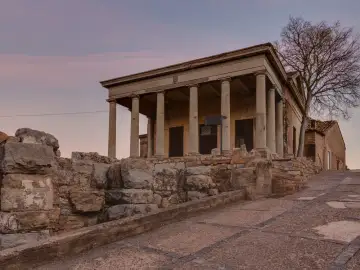 Castle · FREECastillo de SaguntoRegión — Camp de Morvedre (a ~30 min de València)
A huge fortified complex of Iberian and Roman origin stretching along a hilltop above the old town, with a Roman theatre at its foot.
-
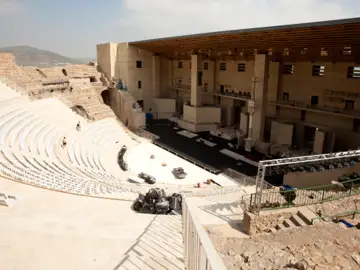 Monument · FREETeatro Romano de SaguntoSagunto — Camp de Morvedre
A 1st-century theatre carved into the castle hillside, it was the first monument declared of national interest in Spain (1896) and still…
-
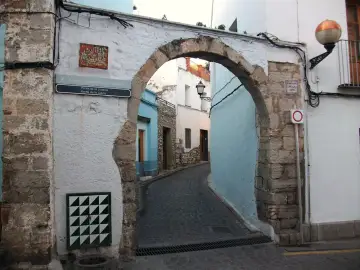 Town · FREEJudería de SaguntoSagunto — Camp de Morvedre
A maze of cobbled alleyways and stone houses preserves the layout of the old medieval Jewish quarter, just steps from the Roman Theatre.
-
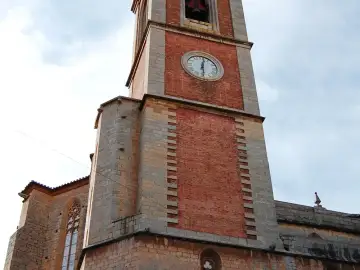 Monument · FREEIglesia de Santa María y Templo de DianaSagunto — Camp de Morvedre
This Gothic-Renaissance church stands over Sagunto's old Jewish quarter, and its walls hold the remains of the Temple of Diana, an Iberian…
-
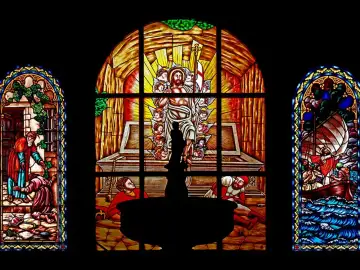 Church · FREEIglesia de El SalvadorBarrio de El Salvador / casco histórico, Sagunto
It is one of the oldest churches in the Valencian diocese, built in the 13th century after the conquest by Jaume I on the remains of an…
-
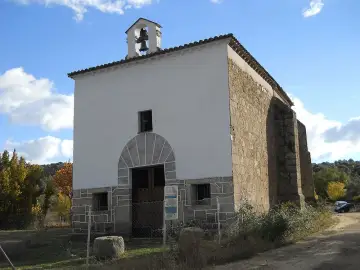 Church · FREEErmita de la SangreCasco antiguo, cerca de la Plaza Mayor, Sagunto
A Baroque hermitage from the early 17th century, tied to the Brotherhood of the Most Pure Blood, already established here by 1607.
-
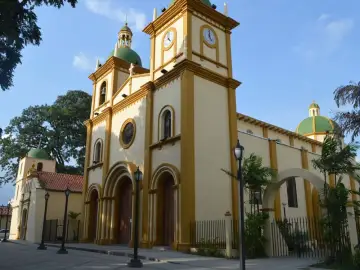 Church · FREEIglesia de Nuestra Señora de BegoñaPuerto de Sagunto (núcleo del puerto), Sagunto
Built in 1929 in Neo-Baroque style, this church in Puerto de Sagunto was modelled on the Basilica of Begoña in Bilbao, a nod to the Basque…
-
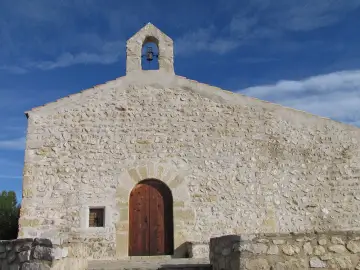 Church · FREEErmita de Sant CristòfolCerro sobre el casco histórico, junto al Castillo, Sagunto
Regarded as the oldest hermitage in the Camp de Morvedre, it dates back to the Reconquista.
-
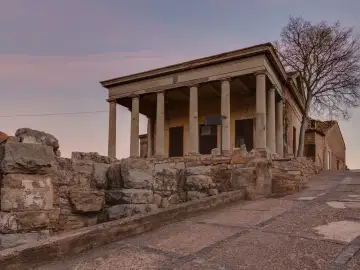 Museum · FREEMuseo Arqueológico de SaguntoSagunto — Camp de Morvedre · 💶 Free
Housed in the Casa del Mestre Peña, a 14th-15th-century building in the heart of the Jewish quarter, it gathers Iberian and Roman finds…
-
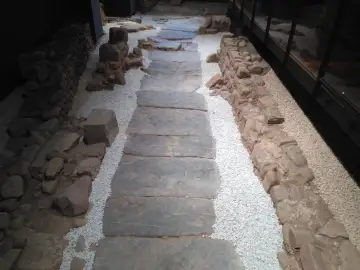 MonumentVía del Pòrtic i Domus dels PeixosSagunto — Camp de Morvedre · 💶 Guided visit 1 €
Two museum spaces revealing Roman Sagunto beneath the old town. The Vía del Pòrtic preserves 60 metres of 1st-century Roman roadway, the…
-
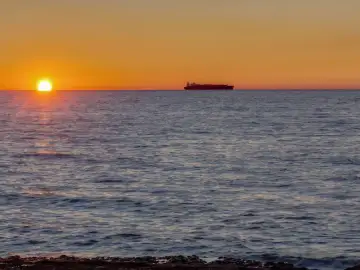 Monument · FREEGrau VellSagunto — Camp de Morvedre
The classical port of Saguntum, beside the Marjal dels Moros and about 6 km from the city, active from the late 6th century BC into late…
-
 Beach & nature · FREEMarjal dels MorosSagunto — Camp de Morvedre
A coastal wetland of around 300 hectares between Sagunto and Puçol, with lagoons, salt marshes and former rice fields protected as a…
-
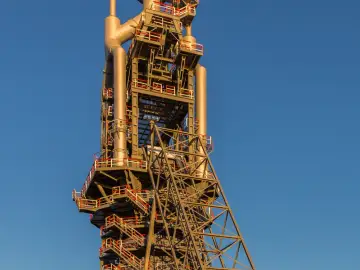 MonumentHorno Alto nº2Sagunto — Camp de Morvedre
The only surviving blast furnace of the old Puerto de Sagunto steelworks, a hulk about 64 metres tall raised in 1922 and rebuilt from its…
-
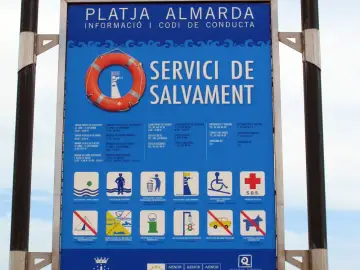 Beach & nature · FREEPlatja de l'AlmardàSagunto — Camp de Morvedre
A beach of fine golden sand on Sagunto's coast, backed by a belt of natural dunes with native flora.
-
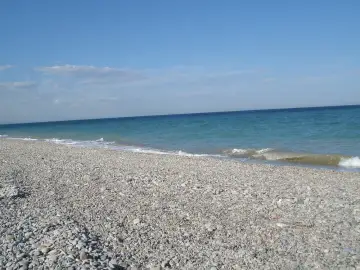 Beach & nature · FREEPlatja de Corinto i MalvarrosaSagunto — Camp de Morvedre
A long, semi-wild stretch of around 3.2 kilometres at the northern end of Sagunto's coast, mixing sand and gravel beside dunes with…
-
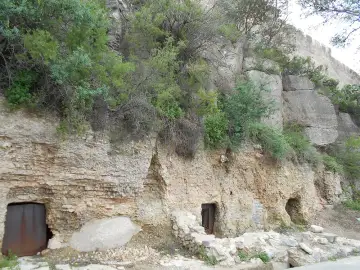 MonumentCementerio Judío de SaguntoSagunto — ladera del castillo, sobre la judería
Hardly anyone climbs up here, yet this is the first visitable Jewish cemetery in Spain: a medieval necropolis of graves cut into the living…
Frequently asked questions
How do you get to Sagunto from València?
By train, on Cercanías lines C-6 or C-5 from València Nord; by AVSA bus along the València to Sagunt to Port de Sagunt corridor; or by car via the V-21, which links to the A-7/AP-7 heading north.
How long does it take from València to Sagunto?
The train takes around half an hour and the bus about 40 minutes. By car it's roughly 30 minutes for the 28 km, depending on traffic leaving the city.
What is there to see in Sagunto?
The main sights are the Roman Theatre and the hilltop castle, plus the medieval Jewish quarter, the Santa María church with the Temple of Diana, and the Archaeological Museum. Near the coast are Grau Vell and the Domus dels Peixos site.
Is Sagunto worth visiting with kids?
Yes. Kids tend to like the Roman Theatre and the climb up to the castle, for the views and the sense of exploring, and afterwards you can head down to the beaches at Port de Sagunt to round off the day.