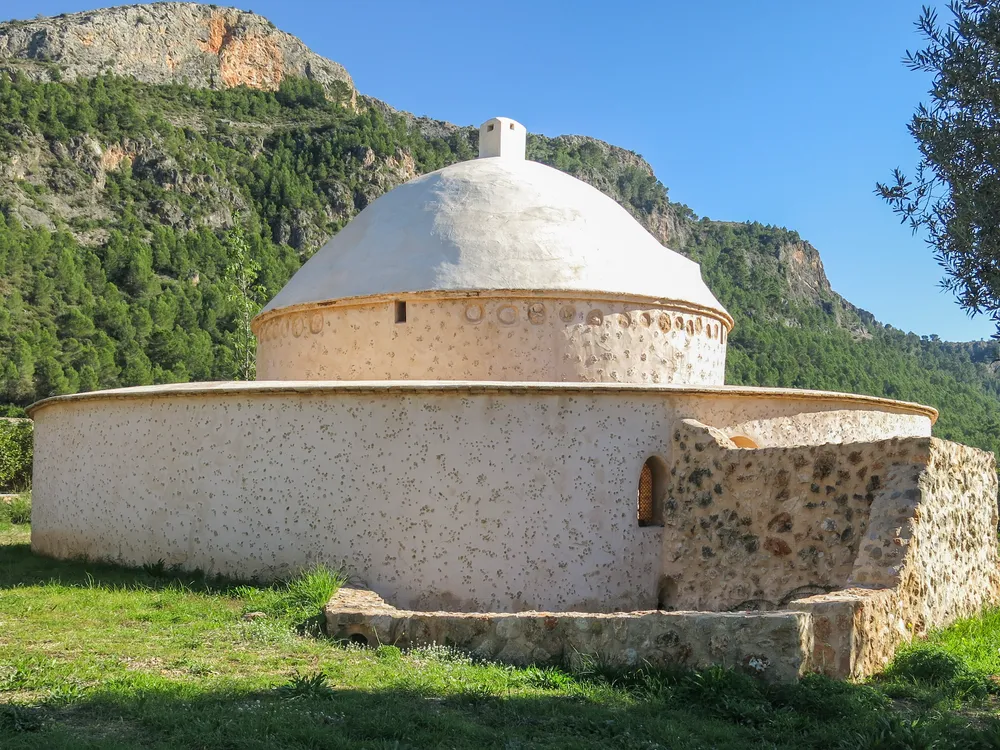
Morabit de Marxuquera
Striking circular building of great ethnological value beside the Marxuquera bridge at the foot of the Serra Falconera, of uncertain date attributed to around the 17th century. Despite its name it was no religious morabito: it was raised as a snow store to keep and conserve ice from the snow trade, later serving as a watch post and tool house. Declared an Asset of Cultural Interest in 1982, it now works as a rural-life interpretation centre open for guided visits.
The name is misleading. The Morabit de Marxuquera was never a religious shrine but an ice store: a circular building raised to keep the ice of the snow trade. It stands beside the Marxuquera bridge at the foot of the Serra Falconera, within the district of Gandia.
What it was for
Its date is uncertain, put at around the 17th century. Snow brought down from the mountains was pressed inside and, turned to ice, was kept to be sold in summer. When that trade declined, the building changed jobs: it served as a watch post and as a tool house for work in the fields.
What to see today
Its distinctive circular form and ethnological value earned it the status of Asset of Cultural Interest in 1982. Today it works as a rural-life interpretation centre, visited with a guide, in a quiet corner of farmland and hills well off the usual route.
Frequently asked questions
Is the Morabit de Marxuquera free?
No, today it works as an interpretation centre visited with a guide; it is best to check opening times before going.
Where is the Morabit de Marxuquera?
Next to the Marxuquera bridge, at the foot of the Serra Falconera, in Gandia's municipality.
What is the Morabit de Marxuquera really?
Despite its name, it was not a religious shrine: it is a circular building raised as an ice house to store the ice of the snow trade, attributed to around the 17th century and declared a Site of Cultural Interest in 1982.
Comments
Sign in with Google to comment and rate
What did you think? Be the first to share it.