What to see in Chulilla
Chulilla is one of those villages that make you forget València is less than an hour away by car. It sits above a bend in the Turia river, whitewashed houses clinging to the edge of a dizzying canyon topped by a Moorish-era castle. The setting was so naturally defensive that the village barely needed a wall: the cliff itself did the job.
What to see and do
The big draw is the Hanging Bridges Route, a circular trail through the Turia gorges that crosses wooden walkways suspended about 15 metres above the water (there's a small symbolic access fee). The route reaches the Loriguilla reservoir, passing through the canyon the river has carved over thousands of years. Don't miss the Charco Azul either, a turquoise pool with a jetty that's perfect for a summer swim, or the climb to the 14th-century castle, a listed historic monument, where the canyon view makes the climb worth it. In the village itself, the church of Nuestra Señora de los Ángeles is worth a stop.
Getting there from València
By car it's about 60 km (just under an hour): take the A-3 towards Madrid and exit for Chulilla. There's parking before the village, about a 10-minute walk from the square where the trail begins. Public transport is very limited, so a car is by far the most convenient option.
Local tip
Start early: on fine-weather weekends the hanging bridges fill up and queues form at the narrowest sections. Arrive first thing and you'll have the canyon almost to yourself, with better light for photos. Pair the trip with a nature getaway around the region and check our day trips from València or the prettiest villages near València. If you're after more watery spots, take a look at Anna and its gorges.
Compare all towns by transport →
-
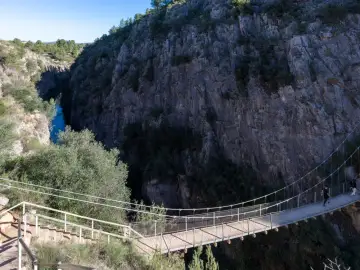 Town · FREEChulillaRegión — Los Serranos (a ~60 km de València)
A village perched beneath an Arab castle and surrounded by the canyon of the river Turia.
-
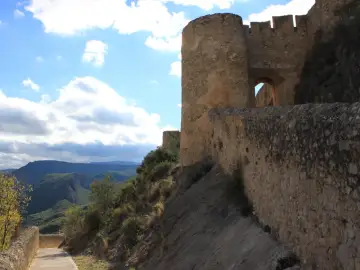 Castle · FREECastillo de ChulillaChulilla — Los Serranos
A fortress of Muslim origin on a rocky crag above the village and the bend of the River Turia.
-
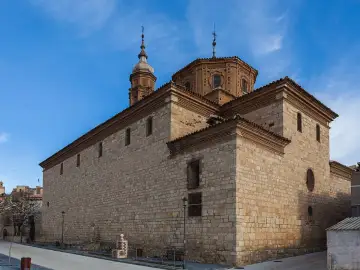 Monument · FREEIglesia de Nuestra Señora de los ÁngelesChulilla — casco antiguo
A Gothic-style church built over a former medieval mosque, with a slender 18th-century bell tower rising among the houses.
-
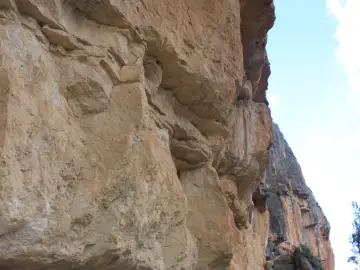 Viewpoint · FREEMiradores del Cañón del Turia (La Peñeta y las Cuevas)Chulilla — cañón del Turia
Natural balconies dotted around the village, such as the Mirador de la Peñeta or the Mirador de las Cuevas, look out over the Turia canyon…
-
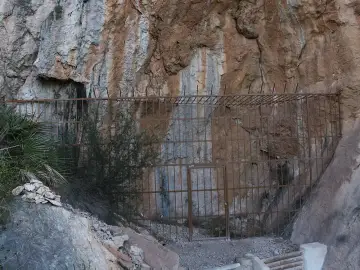 Hidden gem · FREEBarranco de Falfiguera (pinturas rupestres)Chulilla — barranco al sur del pueblo
A little-used ravine south of the village, with prehistoric rock paintings on its stone walls.
-
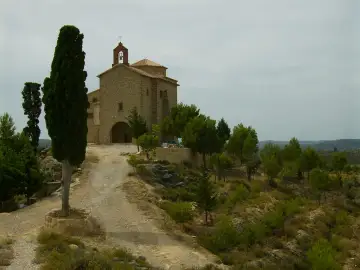 Church · FREEErmita de Santa BárbaraCerro a aproximadamente 1 km del pueblo, Chulilla
Gothic in origin and dated to 1364, this hermitage crowns a hill about a kilometre from the village and shelters Chulilla's patron saint.
-
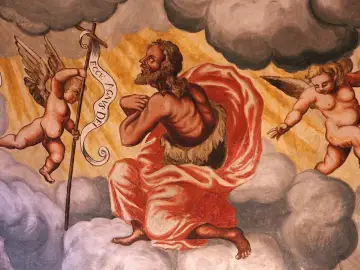 Church · FREEErmita de San JoséCalle Arrabal, parte baja del pueblo, Chulilla
Built in 1662, this simple Baroque hermitage with a single nave, barrel vault and round-arched openings is the sole survivor of the many…
-
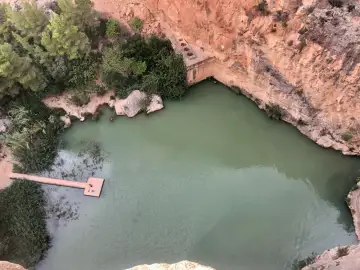 Beach & nature · FREEParaje Natural Municipal Los CalderonesRegión — Los Serranos (a ~60 km de València)
A protected natural area declared in 2007 covering some 538 hectares of the Turia river gorges, where the water has carved a spectacular…
-
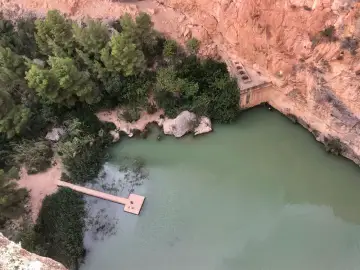 Beach & natureCharco Azul (Río Turia)Región — Los Serranos (a ~60 km de València) · 💶 Trail eco-tax of 1 € per person per day (free for Chulilla residents)
A natural pool of crystal-clear, turquoise water deep in the Turia canyon, wedged between the vertical walls of the Los Calderones area.
-
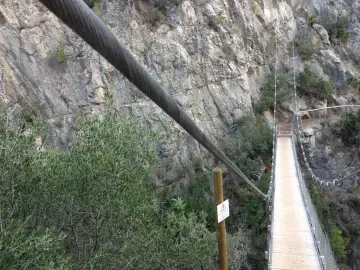 MonumentRuta de los Puentes Colgantes (senda de los Pantaneros)Región — Los Serranos (a ~60 km de València) · 💶 Eco-tax of 1 € per person per day, every day (free for Chulilla residents)
Two hanging bridges with wooden decks and steel cables that cross the Turia canyon, descendants of the paths opened by the "pantaneros"…
-
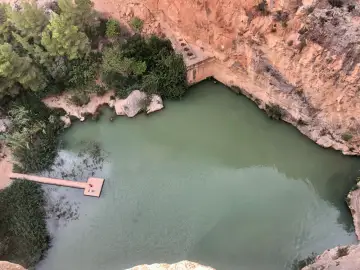 ViewpointMirador de la CarruchaRegión — Los Serranos (a ~60 km de València) · 💶 Trail eco-tax of 1 € per person per day (free for Chulilla residents)
A natural balcony leaning over the Turia canyon, directly above the Charco Azul, looking down on the river boxed between the cliffs.
-
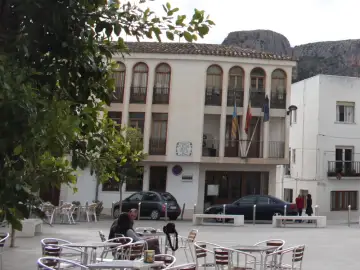 Monument · FREEPlaza de la BaroníaRegión — Los Serranos (a ~60 km de València)
The central square and social heart of Chulilla, presided over by the town hall and tourist office, with its fountain, bars and shops.
-
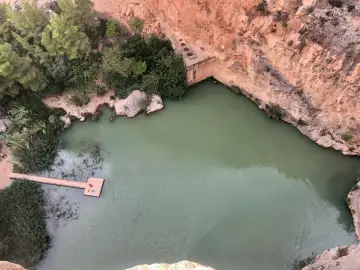 Beach & nature · FREESalto de ChulillaRegión — Los Serranos (a ~60 km de València)
A striking narrowing of the Turia canyon, about 160 m deep and barely 10 m wide, the tightest point of the gorges.
Frequently asked questions
How do you get to Chulilla from València?
By car along the CV-35 towards Ademuz, exiting near Villar del Arzobispo or Losa del Obispo. There is a bus run by La Hispano Chelvana, but its timetable is built around residents. There is no train.
How long does it take and how far is it?
It's about 61 km, roughly 45 minutes by car, much of it on dual carriageway. The bus, when it runs, takes around 1 h 40 min.
What is there to see in Chulilla?
The Moorish castle above the gorge, the old town around the church of Nuestra Señora de los Ángeles, and Turia viewpoints such as La Peñeta. The main draw is the Hanging Bridges route (senda de los Pantaneros) and the Charco Azul.
Is it worth visiting with kids?
Yes, especially for the hanging bridges walk: easy going and dramatic alongside the river. In summer, set off early to beat the heat and the crowds.
🔒 Secret spots
 Hidden gemThe other pool — the one nobody finds
Just outside an inland village where everyone crowds into the same postcard-famous swimming hole, there's another pool almost nobody finds: a narrow, deep canyon where the water turns dark and cold, and you can swim upstream to small hidden waterfalls tucked between the rock walls — usually with no one else around. No signs, no queue, no beach umbrellas, just stone, silence and cold water. The people who know about it like to keep it that way.
 Hidden gemOchre archers and dancers, all to yourself
While everyone else queues for the village's most-photographed sight, a handful of hikers peel off up an almost-forgotten ravine to a rock shelter where hunters, dancers and archers have stood painted in ochre for thousands of years. No one points the way — you earn the climb with real boots, real water and a steep final scramble before it reveals itself, almost always with no one else there.